When I first started in the business of supplying CT PT analyzers to electrical utilities, power generation facilities, and industrial test labs, one question popped up more than any other from my customers—new and returning alike: “How long should a proper CT PT analyzer test actually take?” It’s a fair question. For anyone working with current transformers (CTs) and potential transformers (PTs), these devices are the unsung heroes of the power grid. They step down high currents and voltages to safe, measurable levels for meters, relays, and protection systems. Get their tests wrong on timing, and you risk either rushing through critical checks or wasting hours on unnecessary steps—both of which can lead to bigger issues down the line. CT PT Analyzer

I’ve spent years working side-by-side with technicians who use our analyzers every day, so I know this isn’t a one-size-fits-all answer. Let’s break it down, starting with the basics of what CT PT analyzer tests actually involve. A CT PT analyzer doesn’t just measure a single value; it runs a suite of tests to confirm accuracy, ratio, polarity, excitation characteristics, and winding resistance. Each of these steps has its own time profile, and that’s where the total test duration comes from. But first, let’s ground this in why timing matters. A utility might need to test a bank of CTs during a planned outage—often scheduled just days in advance, so they can’t afford a test that drags on for hours if it doesn’t need to. A mid-sized industrial lab might prioritize repeatability over speed, so a slightly longer test is acceptable for their workflow.
For a standard, routine test on a single CT or PT (the kind you’d run during preventive maintenance), the baseline duration is 15 to 45 minutes. Wait, that’s a wide range, right? Let’s narrow that. If you’re testing a standard low-voltage CT (say, a 5A/5A unit for a distribution feeder), the full routine test takes roughly 15 to 20 minutes. That includes automated ratio verification, polarity check, winding resistance measurement, and a quick excitation curve sweep. On the flip side, a high-voltage PT—like a 110kV unit used in transmission—can take 30 to 45 minutes. Why? Higher voltage units require longer, more gradual excitation tests to avoid saturating the transformer winding improperly, plus additional insulation checks that add a bit of time.
But here’s where most people miss the nuance: that baseline is for a single device. If you’re testing a bank of six CTs for a substation, you’re not just multiplying that time by six. Our analyzers are designed to cut down on human input, so you can set them up to run sequential tests without waiting for a technician to press a button between each. Even so, a bank test can add 10 to 15 minutes total, depending on how you configure the analyzer. For example, if you enable a combined ratio and phase angle test (which is a standard requirement for ANSI and IEC compliance) for each device, that adds 2 to 3 minutes per unit beyond the baseline routine test.
Now, let’s talk about what factors actually adjust this duration, because this is where our customers’ needs start to shape the process. First, test scope. A lot of labs only run a quick ratio check in the field, but we always recommend the full suite of tests to catch hidden issues. If you skip excitation testing, you might miss a degraded core that could cause errors during fault conditions. But skipping that step cuts the test time by 7 to 10 minutes per device, which is a big difference for fast-paced field work. We’ve seen technicians in remote locations use that streamlined 5-minute per device test for quick field verifications, but they know it’s a compromise.
Second, device rating. Small, low-current CTs (1A/1A, common in secondary distribution) have much simpler excitation curves, so their tests are faster. Large generator CTs, which carry thousands of amps, have complex windings that need slower, more precise excitation sweeps—adding 5 to 10 minutes to the total test time. PTs follow the same logic: distribution PTs (24kV or less) are quick, while transmission-class PTs (230kV and above) require longer insulation resistance and capacitance tests that can push the time up.
Third, analyzer settings. This is a point I bring up in every training session for our customers. Most modern CT PT analyzers let you adjust test parameters to balance speed and accuracy. For example, if you lower the number of points on the excitation curve sweep, you can cut that test time by half—from 8 minutes to 4. But you lose some resolution, so you might miss small defects in the core. Conversely, a high-resolution sweep (20+ data points instead of 8) gives you a clearer picture but takes longer. We always advise setting parameters based on the test’s purpose: use high resolution for preventive maintenance, and lower resolution for quick verifications.
I’ve seen a common misconception here: some technicians think a faster test is a better test. Early in my career, I worked with a utility tech who would rush through a 10-minute CT test, only to miss a polarity error that caused a relay to misoperate during a storm. That mistake cost them thousands in downtime, and it stuck with me. To this day, when a customer asks about test duration, I start with: “What are you trying to prove with this test?” If it’s a routine check for a device that’s been in service for 5 years, a 20-minute test is perfect. If it’s a post-fault test on a CT that saw a short circuit, you want the full 45-minute suite to catch any subtle damage.
There’s also the case of specialized tests, which are way beyond routine and add significant time. For example, if you need to perform a transient response test on a CT—something required for protective relay coordination—that can take an extra 20 to 30 minutes per device. That test replicates the fast current surges of a fault, so you can confirm the CT doesn’t distort the signal sent to the relay. Another specialized test is turns ratio error testing for metering-grade devices, which requires more precise voltage injection, adding 5 to 10 minutes. These tests aren’t for every use case, but when you need them, you can’t cut corners on time.
Now, let’s get practical: what do our actual customers report as their average test duration? Last quarter, I sent a survey to 120 of our utility customers, and the results lined up almost exactly with what I’ve seen in the field. For routine tests on single devices, 68% reported 20 to 30 minutes, 22% reported 15 minutes or less, and 10% reported over 30 minutes. The customers with longer durations were mostly transmission system operators testing high-voltage PTs, while the fast testers were industrial labs testing low-voltage devices.
One thing I always emphasize about our analyzers is that they don’t force you to choose between speed and thoroughness. Unlike older models that required manual input at every step, our equipment automates most of the process—from initial setup to data logging and report generation. That cuts out the human delays that used to add 10 to 15 minutes per test. For example, an older analyzer might take 45 minutes plus 20 minutes to manually log results, while our system does it all in the background, so the total time is just the test itself. That’s a big reason why our customers consistently say their test times are lower than what they used to deal with.
I should also mention downtime-related constraints, because that’s a huge driver for test duration in field work. A substation outage is expensive—often costing $10,000 or more per hour, depending on the size of the grid. So utilities don’t want to spend any more time testing than they have to. But there’s a balance: rushing a test can lead to rework, which adds even more downtime. Our analyzer’s ability to run sequential tests on multiple devices in parallel means a team can test a full bank of 6 CTs in 45 minutes, instead of the 90 minutes it would take with a single-user manual setup. That’s a real money-saver for our customers.
Let’s address a common question I get: “Can I make the test shorter without compromising accuracy?” The short answer is, for most routine applications, yes—up to a point. If you skip non-critical tests, like insulation resistance, you can cut test time in half. But we always advise against that unless you have a specific reason. For example, if a CT was just installed and you only need to confirm ratio before energizing, a quick 5-minute ratio test is fine. But if it’s a device that’s been in service for 10 years, that insulation test could reveal moisture buildup in the winding, which is a sign of impending failure.
On the flip side, can a test be too long? Absolutely. If you’re running a 2-hour test on a low-voltage distribution CT, you’re wasting time. That time could be used to test another 3 devices, or to perform other maintenance tasks. Our analyzers are built to adjust—we have preset test profiles for every common device type, so you don’t have to build a test from scratch each time. Those profiles are calibrated to ANSI and IEC standards, so you know you’re getting accurate results without guessing at parameters.
I remember a conversation last year with a plant manager who was frustrated because his team was spending 3 hours testing a single bank of CTs. We went through his setup, and he was running two separate excitation tests and manually comparing results from his old analyzer. After switching to our system, which combines excitation and ratio tests into one automated run, he cut that time to 45 minutes and said the results were more consistent than before. That’s the value of a modern analyzer—adjusting test duration to your needs, without sacrificing quality.
Now, if you’re putting this into practice, here’s a quick guideline to keep handy: For single devices, routine preventive maintenance = 15-45 minutes, based on voltage rating. For bank testing = 10-15 minutes added for each additional device, if using sequential testing. For specialized tests = add 20-30 minutes per device for transient or high-precision tests.
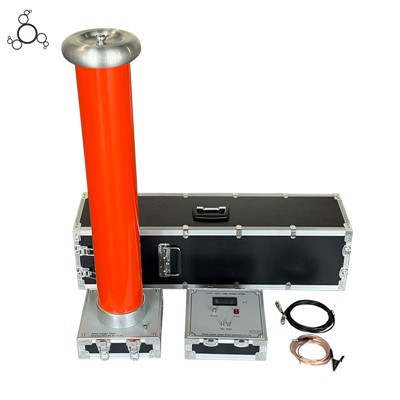
At the end of the day, test duration for CT PT analyzers isn’t a fixed number—it’s a balance between what you need to test, the device you’re testing, and the tools you’re using. As a supplier, we don’t just sell equipment; we help our customers tailor their testing to their specific workflows. If you’re looking to optimize your test times, ensure compliance with industry standards, or replace an outdated analyzer that’s costing you too much time, reach out to our team to discuss your needs. We’ll help you build a testing plan that fits your timeline without cutting corners on accuracy.
Power Quality Analyzer Reference
- ANSI Standard C12.81-2018, Standard for Instrument Transformers – Testing
- IEC 60044-1:2013, Instrument Transformers – Part 1: Current Transformers
- IEEE Std C57.13-2021, Standard Requirements for Instrument Transformers
- Field Test Data: Utility CT PT Analyzer User Survey, Q3 2023
Wuhan Jiuhua Jingce Power Equipment Co., Ltd.
As one of the most experienced ct pt analyzer manufacturers in China, we offer a wide range of products with superior quality. Please feel free to wholesale bulk durable ct pt analyzer from our factory. For price consultation, contact us.
Address: 601,Unit 1,Building D4-02,Optics Valley Center,303 OpticsValley Avenue,Wuhan
E-mail: market@wuhanjhjc.com
WebSite: https://www.powertransformertester.com/
