If you’ve ever walked past a construction site, peeked inside a factory control room, or even wondered how a robotic arm in an assembly line moves smoothly without glitching, you’ve probably come into contact with two types of cables that get mixed up all the time: control cables and communication cables. As a control cables supplier, I’ve lost count of how many times I’ve gotten calls from folks asking for “communication cables” when they actually need something to get machinery running, or vice versa. It’s a small mix-up that can cause big headaches—like a factory line shutting down mid-shift, or a sensor not sending the data it’s supposed to. So let’s break this down, plain and simple, no tech jargon that makes your eyes glaze over. Control Cables
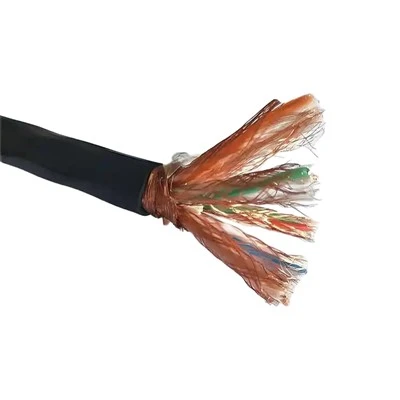
First, let’s get one thing straight: neither cable is “better” than the other—they’re built for totally different jobs. Think of it like comparing a delivery truck to a passenger van. Both move stuff, but one’s designed to haul pallets across a highway, and the other to cart people around a mall. That’s control vs. communication cables. Let’s start with what control cables do, since that’s what I know best. Control cables are the ones that make “things happen” in industrial, commercial, and even some residential settings. They carry low-voltage power and signals to operate, monitor, or control specific devices: think motors, valves, sensors, circuit breakers, or the actuators that open a factory’s automated doors. These cables aren’t just wires wrapped in plastic—they’re built to handle harsh environments. I’m talking about factories where there’s oil, dust, extreme temperatures (both hot and cold), or even occasional moisture. A control cable from our shop might have a tough outer jacket, tinned copper conductors to resist corrosion, and a shield to block interference from nearby big machinery that could mess up the signal.
Communication cables, on the other hand, are all about sending data—moving information from one point to another, not making something physically move. These are the cables that connect your office computer to a printer, carry internet to your home Wi-Fi router, or link a building’s security cameras to the monitoring desk. They handle higher-speed data transfer, whether that’s video, audio, or network signals. You’ve probably heard of Ethernet cables (like Cat5e, Cat6) or fiber optic cables—those are communication cables. They’re designed for speed and clarity, mostly in cleaner, less demanding spaces: offices, data centers, home networks. Sure, some industrial comms cables exist, but even those prioritize data integrity over the heavy-duty performance control cables need.
Wait, let’s dive deeper into the nitty-gritty so you can spot the difference at a glance. First, voltage and power load. Control cables run on super low voltage—usually 24V or less. That makes sense because they’re running small devices, not powering a whole room. Communication cables? They carry way less power (we’re talking millivolts here) because they’re just shuttling signals, not powering anything. That means control cables have to be sturdier to handle carrying a tiny bit of power consistently, sometimes for long periods, without overheating or wearing out.
Then there’s construction and shielding. Control cables almost always have multiple conductors twisted together (or some variation) to keep signals tight, and a heavy-duty shield (like braided copper or foil) to block electromagnetic interference (EMI). Why? Because factories are full of big motors, welders, and heavy equipment that pump out EMI like crazy—if a control cable didn’t have a good shield, the signal could drop, and a valve might not open when it’s supposed to. Communication cables often have shielding too, but it’s usually thinner, focused on keeping data clean rather than withstanding industrial-level interference. For example, a Cat6 cable might have a foil shield, but it’s not built to be run through an area where a forklift could bump it, or exposed to oil.
Environment is a big one I see get overlooked. Control cables are built to live outside, inside harsh industrial spaces, underground, or even in moving parts (like on a crane or robotic arm). Their outer jackets are made from materials like PVC, polyurethane, or neoprene that resist chemicals, UV rays, abrasion, and moisture. Communication cables? Most are built for indoor use only. Try running a standard Ethernet cable through a construction site for a month, and it’ll be frayed, cracked, and dead by the end. I’ve had customers who tried that—wasted time, wasted money, and a half-day delay while we replaced their control cables with the right stuff.
Another key difference: application and end use. Let’s list out examples to make it real. Control cables go into: factory automation (controlling conveyor belts, robotic arms), HVAC systems (controlling dampers and fans), transportation (like train signaling systems, bus door controls), and even agricultural equipment (controlling irrigation valves). Their job is to execute a command: “open valve,” “speed up conveyor,” “stop motor.” Communication cables go into: local area networks (LANs), internet connections, telecommunication systems (phone lines, cell tower links), audio-visual setups (HDMI cables, which are a type of communication cable), and building security systems (CCTV links, access control data transfers). Their job is to send a message: “here’s a video feed,” “this is a file update,” “authenticate access.”
Wait, but what about when they overlap? Sometimes in industrial settings, you’ll see control and communication cables running side by side in a cable tray. But even then, they’re doing different things. For example, a factory’s control system might use a control cable to tell a motor to run, while a communication cable sends data from that motor’s sensor to a central monitoring computer. Mixing them up here is a common mistake—if you run a flimsy communication cable where the control cable should be, you’ll get signal dropouts that cause downtime. That’s where knowing the difference saves you from a costly repair.
Let’s talk about a real mix-up I had last quarter. A customer who runs a small auto parts factory called me panicking. They’d bought what they thought was “industrial cable” from a big box supplier, installed it to control their stamping press, and the press kept glitching—half the time it wouldn’t retract, causing a jam that shut down the line. When they brought a sample over, I could tell right away: it was a communication cable. No heavy-duty shield, outer jacket that looked like standard PVC (not oil-resistant), and conductors too thin for consistent control power. We swapped it out for a control cable we stock, and their glitches stopped within an hour. That’s exactly why clear communication (pun intended) about what you need matters.
Now, let’s clear up some myths. Some people think control cables are just for factories, but that’s not true. We supply control cables for residential uses too—like controlling whole-house generators, smart home automation systems that run on low voltage, even outdoor landscape lighting controls. Communication cables, meanwhile, aren’t just for homes—they’re critical for businesses, but their niche is data, not control.
What about maintenance? If you’re working with control cables, you have to check for wear and tear more often in harsh environments—abrasion from machinery, chemical exposure, temperature swings can degrade the jacket over time. Communication cables need occasional checks too, but usually for connection issues or damage from pets or accidental cuts, not the harsh industrial stuff.
So how do you tell which one you need, even if you’re not a cables expert? Ask yourself two questions: 1) Am I trying to make a device perform an action (open, run, stop) or am I trying to send data (video, files, sensor readings)? 2) Will this cable be in a harsh environment (oil, dust, extreme temps, outdoors)? If both answers are yes, you need a control cable. If the first is data and the second is a clean, indoor space, you need a communication cable.
Now, as a control cables supplier, let me be upfront: I don’t sell communication cables, and that’s not a problem. If a customer calls and says they need a communication cable, I’ll point them to a trusted supplier who specializes in that. My job is to make sure you get the right cable for the right job, so you don’t have the same factory jam or Wi-Fi drop that costs you time and money.
At the end of the day, the line between these two cables is all about purpose. Control cables are the hands that do the work, communication cables are the eyes and ears that share information. Confuse them, and you’ve got a hand that can’t grip, or ears that can’t hear. Whether you’re outfitting a new factory, upgrading your home’s automation, or just replacing a broken cable, taking the extra minute to confirm which type you need will save you from headaches later.

If you’re not sure which cable is right for your project, don’t guess—reach out. We can talk through your setup, the environment the cable will be in, and what you need it to do, so you get exactly the control cable you need, no mix-ups, no delays.
Specialty Cables References
- Industrial Cable Association. (2022). “Types of Cables for Industrial Automation and Control.” Industrial Cable Association Technical Bulletin.
- National Electrical Manufacturers Association (NEMA). (2021). “Standard for Control Cables for General Industrial Use.” NEMA publication WC 5.
- Telecommunications Industry Association (TIA). (2023). “Standard for Commercial Building Communications Wiring.” TIA-568-C.2.
- International Electrotechnical Commission (IEC). (2020). “Low-Voltage Control Cables: Construction and Performance Requirements.” IEC 60227.
Anhui Yuantong Cable Co., Ltd.
As one of the most professional control cables manufacturers and suppliers in China, we offer a wide range of cables with superior quality. Please feel free to wholesale bulk customized control cables from our factory. Also, pricelist is available.
Address: Yongfeng Industrial Park, Tianchang City, Anhui Province
E-mail: ahytcable@126.com
WebSite: https://www.yuantongcable.net/
