Hey everyone, Jake here—longtime safety edge supplier and the guy who’s talked hundreds of contractors through the confusing bits of job site gear. If you’ve spent any time on a construction crew, you’ve definitely heard “safety edge” and “toeboard” thrown around like they’re the same thing. Spoiler: they’re not. Mix ’em up, and you’re either wasting money on the wrong gear or missing a critical fall protection line. Let’s break this down straight—no stuffy OSHA jargon, just what works for real job sites. Safety Edge

First, let’s set the scene. I get calls every single week from crew leads going, “Wait, my foreman said to install toeboards for the roof edge, but the supply shop handed me safety edge. Which one’s right?” Half the time, they didn’t even bother checking why each exists, which makes sense—both live on edge lines, both keep stuff from falling, both sound like they do the same job. But pull back the curtain, and they’re built for totally different jobs. Let’s start with what each is actually made of, because that’s the first big difference you can spot with your own eyes.
Safety edge, from the stuff I sell, isn’t just a flimsy strip of plastic or wood. It’s a rigid, heavy-duty barrier—usually aluminum, steel, or reinforced plastic with a solid structural core. It’s made to bolt or clamp directly to the edge of a floor, roof, or scaffolding, not just sit there. I’ve had roofers tell me they’ve kicked a loose board off a flat roof before; that’s exactly why safety edge needs that structural hold. It’s not just supposed to block things—it’s supposed to take a little impact, too. A stray ladder, a bag of nails, even a worker leaning a little too far on it shouldn’t knock it loose.
Toeboards? Those are way simpler, and I’ll be honest—most of the cheap ones are just 2×6 lumber nailed to a frame, or even a thin vinyl strip for temporary sites. Wait, no, hold on—OSHA does have minimum specs for toeboards, right? Let me not mislead. The official rule is toeboards need to be at least 3.5 inches tall, ¼-inch thick if they’re metal, solid, no gaps big enough for a 1-inch diameter object to fall through (that’s roughly a golf ball, for reference), and they have to be securely attached. But even with that, they’re not designed to be impact-resistant. They’re just a low, temporary barrier for small stuff. They’re not supposed to stand up to a collision. I’ve seen a 2×6 toeboard get kicked off by a worker hauling a roll of wire around the edge of a scaffold—total hazard, because the whole point of a toeboard is to keep tools and materials from dropping 20 feet on someone’s head below.
Next, let’s talk about where each goes. That’s a mix-up I see every day. Safety edge is your primary fall protection for unprotected edges—think the 6-foot drop of a roof under construction, a new floor pour with no walls, or a 10-foot scaffold platform that’s not fully enclosed. It’s your top line: it keeps workers from stepping over the edge accidentally, right? Wait, no—wait, actually, safety edge is often part of a guardrail system, which is 42 inches tall, right? Toeboards are the lower one. Oh, that’s a key point I almost missed. Guardrail systems (the 42-inch barriers) usually have a top rail, a mid rail, and a toeboard at the bottom. But sometimes people call the whole thing “safety edge,” which is where the confusion starts. I clarify with clients all the time: safety edge is the full rigid barrier that can act as a guardrail, or a supplementary edge protection that goes along with toeboards. Wait, let me make that concrete. If you’re on a new residential roof that’s open, no framing up yet, you don’t just put a toeboard there—you put safety edge along the entire perimeter, because that’s the only thing that’s tall enough and strong enough to stop a worker from falling. Toeboards? They live below guardrails, usually 4 inches off the platform, right at the gap where your boots could slip or tools could slide out. They’re never a standalone edge protection for more than a foot or two drop, tops. OSHA says toeboards can’t be used as a substitute for guardrails, full stop. That’s a big rule, and I’ve had clients get cited for that because they tried to save a buck by nailing a 2×4 to the edge instead of installing proper safety edge and guardrails.
Then there’s what each protects against, and here’s where the rubber meets the road for job sites. Safety edge does double duty: it stops falls and keeps materials from sliding off the edge. But because it’s rigid, it can handle a little more force. I had a client last year who was framing a commercial roof, and his crew was hauling bundles of shingles along the edge. They accidentally dropped one bundle—hit the safety edge, it didn’t budge, no shingles fell, no one got hurt. If that had been a toeboard? The 2×6 would’ve split, the shingles would’ve gone flying, maybe hit a worker on the ground. That’s the difference right there. Toeboards are only for the small stuff: loose nails, a half-empty bucket of screws, a tape measure that slipped out of a pocket. They’re low, so they only catch stuff that’s tumbling a few inches, not a 100-pound bundle falling 30 feet.
Wait, but what about temporary sites? A lot of small contractors use toeboards for short jobs, like a 4-foot drop on a deck they’re building. That’s fine, right? I’m not here to say toeboards are useless. They’re cheap, easy to install with nails or staples, perfect for quick, low-risk jobs. But when you’re dealing with edges that are 6 feet or higher, or jobs where heavy materials are moving around, toeboards aren’t enough. That’s where safety edge comes in. It’s modular, too—you can adjust it to fit curved edges, stairwell openings, even the weird notches on a commercial building’s facade. Toeboards? They’re straight—you can bend a wood toeboard a little, but not enough for a curved roof edge without a bunch of cuts, which takes extra time and money. I sell safety edge that’s flexible enough to wrap around a 90-degree corner in 10 seconds, no tools, just clamps. That’s a huge time saver for crews rushing to meet a deadline.
Another thing: maintenance and inspection. I talk to inspectors all the time, and they’ll tell you the difference between a safety edge inspection and a toeboard inspection is night and day. Toeboards need to be checked for splits, loose nails, gaps—if a gap is bigger than 1 inch, you have to fix it. Safety edge? You’re checking for dents, loose clamps, rust on metal strips, because it’s a structural barrier. If a safety edge is damaged, you can’t just nail a piece of wood over it—you have to replace the damaged section, because it’s holding up to way more stress. I had a guy call me last month panicking because his safety edge had a 2-inch dent from a nail gun ricochet; he thought he had to tear the whole thing out, but we sent a replacement end cap, he swapped it in 5 minutes, no downtime. Toeboards, if they get a dent, you just nail a new board over the old one—way less work, but again, only for low-stakes jobs.
Wait, let’s bust a common myth I hear all the time: “Toeboards are cheaper than safety edge.” Yeah, upfront, maybe. A 10-foot length of 2×6 lumber is like $5, vs. a 10-foot safety edge strip for $20. But let’s do the math. If you’re on a job where a falling tool hits a toeboard, it breaks, you have to replace it—another $5, time to tear out the old one, install the new one. Or worse, if that tool hits a worker on the ground, you’re looking at OSHA fines that can be $15,000+ per serious violation, plus workers comp, plus delayed project timelines. Safety edge might cost more upfront, but it’s a one-and-done for most jobs, no mid-project replacements, no fines, no accidents. I’ve had clients tell me they saved $1,000 in fines and repairs on one job just by switching from toeboards to safety edge for the roof edge.
Let’s wrap this up with a quick checklist so you never mix them up again. Ask yourself three questions: 1. Is this edge a drop of 6 feet or more, or will heavy materials (bundles, equipment) be moving nearby? If yes, get safety edge. 2. Is this a low, temporary edge (under 4 feet) just for catching small loose stuff? If yes, toeboards work here. 3. Am I using this as standalone fall protection? If yes, never use toeboards—they’re not OSHA-compliant for primary edge protection.
Wait, one last thing I don’t see a lot of blogs mention: weather. If you’re working on a job site in rain, snow, or extreme heat, safety edge holds up way better. Wood toeboards warp in humidity, splinter in cold, get brittle in sun. Safety edge—aluminum or plastic—doesn’t warp, doesn’t splinter, works in any temperature. I’ve had crews tell me they left toeboards up over a weekend in a rainstorm, and half of them were loose from swelling wood; safety edge was still tight, no issues. That’s a small thing, but it adds up over the course of a project.
At the end of the day, the core difference is purpose: safety edge is a structural, impact-resistant primary barrier for high-risk edges and heavy materials, and toeboards are low, temporary secondary barriers for small debris. Mixing them up isn’t just a small mistake—it’s a safety risk, and it’s a quick way to get cited, or worse, have a job site incident.
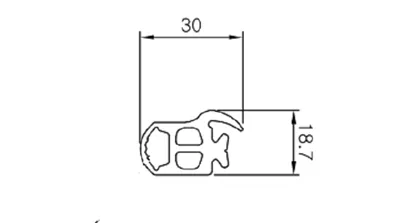
If you’re not sure what you need for your next job—whether you’re doing a residential roof, a commercial scaffold, or a deck build—hit me up to chat. I don’t do pushy sales; I’ve been in this industry long enough to know that the right gear saves everyone time and money. We can walk through your site layout, figure out exactly what’s needed, no confusing jargon, no weird hidden fees. Just give a shout, and we’ll get your order sorted fast.
Sensor Processor References
- Occupational Safety and Health Administration (OSHA). 29 CFR 1926.502, Fall Protection Systems Criteria and Practices. U.S. Department of Labor, 2023.
- National Safety Council (NSC). Job Site Fall Protection: Best Practices for Edge Barriers. NSC Press, 2022.
- Construction Safety Association of America (CSAA). Edge Protection Gear: A Field Guide for Crews. CSAA, 2021.
Ningbo Futai Safety Edge Technology Co., Ltd.
Ningbo Futai Safety Edge Technology Co., Ltd. is one of the most professional safety edge manufacturers and suppliers in China, also supports customized service. Please feel free to buy advanced safety edge in stock here from our factory. Contact us for free sample and discount information.
Address: No. 1116, Beihuan West Road, Jiangbei District, Ningbo City, Zhejiang Province
E-mail: info@safety-edge.com
WebSite: https://www.safety-edge.com/
