Hey everyone, Sports LED Trailer
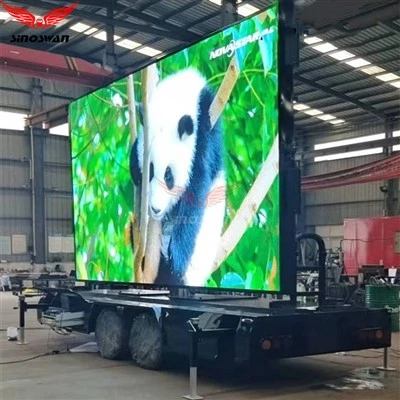
If you’re in the market for a sports LED trailer — whether you’re a small-town youth sports league wanting to broadcast game highlights for parents, a college athletics department looking to show replays on game days, or a traveling sports event company that sets up at tournaments across the country — you’ve probably asked one big question: Are these things actually weatherproof?
I get it. When you’re dropping cash on a piece of equipment that’s going to live outside, rain or shine, hot sun or cold wind, you don’t want it conking out after one bad storm. For years, I’ve been supplying sports LED trailers, and this is the question we get more than any other. Let’s break this down, no fancy jargon, just straight-up what works, what doesn’t, and why your investment needs to hold up through whatever the weather throws at it.
First, let’s clear up a common mix-up: “weatherproof” vs “water-resistant.” A lot of brands slap “weatherproof” on their trailers like it’s a buzzword, but that’s not a one-size-fits-all label. For our trailers, we never just say “weatherproof” — we specify IP ratings, because that’s the actual science here. IP stands for Ingress Protection, right? The first number is how well it holds up against solid stuff, like dust, and the second is how it does with liquids. For a sports LED trailer, you want at least an IP65 rating for the LED panels and the main control box, and IP67 for the battery compartment and any external wiring. Let me explain what that means in real terms: IP65 means it’s totally dust-tight, and it can take low-pressure water jets from any direction — like a heavy rainstorm, even blowing rain — no problem. IP67 means it can actually be submerged up to a meter deep for 30 minutes, in case you get stuck in a flash flood or accidentally back into a puddle that’s deeper than you thought. That’s the baseline we set for every trailer we sell, because we’ve seen what happens when brands cut corners on that.
Early on, when I first started in this business, I sold a few trailers that had IP55 panels. They were cheaper, sure, but after one outdoor tournament where we had a full day of pouring rain, half the LED screens started flickering. Turned out water seeped through the seams around the panel edges, and by the end of the day, we had to shut down the broadcast. The league was mad, the parents were annoyed, and that mistake cost me three clients. Since then, we’ve upgraded every component to hit at least IP65, and we test every single trailer before it leaves our shop. We don’t just spray it with a hose for 10 minutes — we run it through a full weather chamber that simulates 8 hours of continuous heavy rain, plus temperature swings from 100°F down to 20°F, to make sure nothing warps or shorts out. That extra step adds a little to the cost, but it’s worth it. You don’t want to be the person whose trailer dies mid-championship game because of a little rain.
Now, it’s not just the electronics you have to worry about — the trailer’s body and frame matter too. Most of our sports LED trailers are built with a powder-coated aluminum frame, not steel. Steel rusts, plain and simple, especially when it’s exposed to salt from roads in winter, or mud and rain all season. Aluminum is lightweight, easy to tow, and it doesn’t rust. We also add a rubber seal around all the access panels — the ones you use to plug in power, or get to the battery — to make sure no water gets in. Some cheaper brands skip that seal, or use thin plastic instead of rubber, and after a year of being out in the sun, the plastic cracks, and that’s where water gets in. We use EPDM rubber seals, same stuff that’s on car windows, so they hold up for years, even when it’s super hot or freezing.
Wait, what about extreme temperatures? Let’s say you’re hosting a soccer tournament in Arizona in July, where it’s 110°F, or a high school football game in Minnesota in January, when it’s 10 below. Do our trailers handle that? Yep. The LED panels we use are rated for operating temperatures between -40°F and 140°F, so they won’t dim or die in the heat, and they won’t freeze up in the cold. The lithium-ion batteries we use (way better than old lead-acid ones, by the way) have their own temperature regulation — if it’s too hot, they pull back a little on power to keep them safe, and if it’s cold, they warm up automatically so they don’t die mid-game. We’ve tested this last winter, when we dropped a trailer off at a football game in North Dakota, and the temps were -12°F when we set it up. It powered the LED screen and the sound system all night, no issues. That’s not luck — that’s the components we pick.
But here’s the thing: no trailer is “weatherproof” if you don’t do basic maintenance. I know, I know, you’re busy running your sports league or event company, you don’t have time to scrub a trailer every week. But a little upkeep goes a long way. For example, after a game in the rain, wipe down the seams on the panels and the access doors — get rid of any mud or leaves that can build up and trap moisture. Once a quarter, check the wiring connections to make sure they’re still tight, because vibration from towing can loosen them, and that can let water in. We send a free maintenance guide to every client, it’s just a one-page sheet with 5 easy steps, no fancy tools needed. Most people think a weatherproof trailer is set it and forget it, but that’s not how it works. Even the best gear needs a little TLC.
I also get questions about specific scenarios: what about snow? What about high winds? Snow isn’t a big problem if your LED panel is slanted at the right angle — most of our trailers have a 15-degree slope on the screen, so snow slides off instead of piling up. We tested that last year, when we left a trailer outside for a week in 2 feet of snow, and the only time the screen had a little buildup was after a wet, heavy snow, which melts off in a few hours when the sun comes out. High winds? We built the frame to handle up to 70 mph, which is stronger than most storm winds, but we always tell clients to lower the screen if a storm is coming — it’s a quick 2-minute process, and it protects the panel even more.
Let me be real with you — there are some brands out there that will tell you their trailers are “waterproof” and “can survive any weather.” Don’t buy that. True 100% waterproof is impossible for a towed trailer, because it has moving parts, hinges, and access points that can’t be completely sealed. The key is “weather-resistant” but built to handle the actual weather you’ll face in the real world. That’s why all our trailers are used by leagues from coast to coast — from Florida where it rains half the year, to Colorado where you get sudden hailstorms, to Washington where it’s gray and damp all winter. We’ve had clients tell us their trailer was left out in a thunderstorm for 12 hours, and it worked perfectly the next day. That’s the standard we aim for.
Another point: what about the screen’s brightness? A lot of people worry that if the trailer is weatherproof, the LED screen will be dim in bright sun. Nope — the panels we use have a brightness of 5,000 nits, which is brighter than most phone screens in direct sunlight, so you can see game highlights even when it’s sunny out. That’s non-negotiable for a sports trailer, right? If your parents can’t see the replay of their kid’s touchdown because the screen is too dim, what’s the point? We make sure all our trailers balance weather protection with the brightness you need for outdoor sports events, no trade-offs.
I’ve been in this game for 8 years, and I’ve seen trailers from every angle. The worst ones die after one season, the okay ones last 2-3 years, and the ones we supply last 5+ years with regular maintenance. That’s not a sales pitch — that’s just what happens when you build a trailer with the right IP ratings, the right materials, and test it for real conditions, not just lab tests.
If you’re in the market for a sports LED trailer, don’t just go for the cheapest option. Ask the supplier what IP rating the panels and components have. Ask if they test their trailers in real weather, not just a lab. Ask what kind of frame they use, and what kind of seals they have. Those are the details that will save you thousands of dollars in repairs and replacements down the line.
At the end of the day, a sports LED trailer is more than just a screen on wheels. It’s for showing your team’s best plays, keeping parents engaged, making small-town games feel big, or turning a local tournament into an event people remember. You need it to work when you need it, no matter the weather. Our trailers are built for that — no fluff, no fancy buzzwords, just gear that stands up to whatever the weather throws at it.
If you’re ready to talk about what you need, or have more questions about weather protection, feel free to reach out to our team to set up a time to chat. We can walk you through different options, answer any random questions you have, and make sure you get a trailer that fits your needs.
Campaigns Truck References:
- International Electrotechnical Commission. (2020). IEC 60529: Degrees of protection provided by enclosures (IP code). Geneva, Switzerland.
- Sports Video Group. (2022). Outdoor LED display specifications for sports venues. Retrieved from industry technical guidelines.
- Aluminum Association. (2021). Corrosion resistance of aluminum for transportation equipment. Washington, D.C.
- Lithium Battery Energy Storage Association. (2020). Temperature performance guidelines for mobile battery systems. Phoenix, AZ.
Zhengzhou Sinoswan Tech Co., Ltd.
Zhengzhou Sinoswan Tech Co., Ltd. is one of the most professional sports led trailer manufacturers and suppliers in China. We are committed to providing high quality customized products for global clients. We warmly welcome you to wholesale durable sports led trailer for sale here from our factory. Also, quotation is available.
Address: No.21 Shangdu Road, Zhengzhou, Henan Province, China
E-mail: info@sinoswan.com
WebSite: https://www.electiontruck.com/
