If you’ve ever spent time in the industrial parts space, chances are you’ve run across a tiny, unassuming component that makes massive machinery work smoothly: the wave spring. When I first started selling these, I’ll admit I thought they were just a fancy version of a regular flat washer. That was years ago, before I learned just how much a well-designed wave spring can change the performance of everything from a car’s transmission to a medical device’s precision gear assembly. Today, as a supplier who’s worked with thousands of engineers, fabricators, and equipment builders, I want to pull back the curtain on what these parts actually are, why they matter, and how they’ve become such a critical workhorse in so many industries. Wave Spring
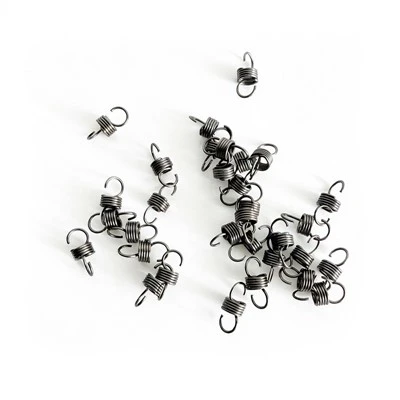
Let’s start with the basics. A wave spring, also sometimes called a wave washer or wave disc spring, is a type of spring made from a single flat strip of metal that’s been formed into a series of repeating waves or corrugations along its circumference. Unlike a traditional coil spring, which is a helical shape made from a continuous wire, wave springs are flat (or nearly flat) in their free state, with those evenly spaced peaks and troughs that give them their name. That simple shape is the reason they have such unique advantages over older, more familiar spring designs.
When you compress a wave spring, those peaks flex like tiny individual levers, generating consistent force over a specific range of compression. The number, height, and shape of the waves—plus the thickness of the metal strip they’re cut from—are all variables we control as suppliers to tune the spring’s load capacity, deflection rate, and overall performance. It’s not a one-size-fits-all part; every wave spring we make is engineered for a specific application, and that customization is where their real value lies.
The biggest difference between a wave spring and a standard coil spring is space. Coil springs, even when made with thin wire, require a certain amount of axial space (the length along the direction they compress) to deliver a given amount of force. A wave spring, because it lies nearly flat in its free state, can fit into spaces that are half the size, or even less, of what a comparable coil spring needs. That’s a game-changer for industries where every millimeter counts. Think of a gearbox in a electric car, where engineers are fighting to reduce weight and shrink the overall footprint while maintaining reliability. Or a surgical robot, where internal components have to be tiny but can’t afford to flex or slip during a procedure. A wave spring fits right into that tight gap where a coil spring would never work.
Another key benefit is consistent force over deflection. Coil springs can experience what’s called “spring rate variability” as they compress, especially as they near their maximum travel. They can also sag over time, losing tension when they’re under load for long periods. Wave springs, though, because of their multi-wave design, deliver a much more linear, predictable force curve. That makes them ideal for applications where precise, steady pressure is non-negotiable. For example, in a clutch assembly, you need consistent pressure to engage and disengage smoothly, without the clutch slipping or feeling too stiff. A wave spring maintains that pressure across thousands, even millions, of cycles, without drifting or changing its performance.
Now, let’s talk about where you’ll actually find these parts. I’ve worked with clients across a huge range of industries, and the uses keep expanding every year. One of the oldest and most common applications is in automotive manufacturing, specifically in transmissions and brake systems. Automatic transmissions use wave springs to hold gear assemblies in place, absorb shock during gear shifts, and maintain preload on bearings to reduce wear. In electric vehicles, as manufacturers move to smaller, more powerful powertrains, wave springs are replacing coil springs almost entirely in these spaces, because they cut down on overall weight—critical for extending battery range—and reduce friction in moving parts.
Medical devices are another massive market for us. We supply wave springs for everything from insulin pumps to surgical staplers to MRI-compatible equipment. In a surgical stapler, for example, the spring has to deliver consistent force to close tissue evenly, without deforming or failing after hundreds of uses. A wave spring, made from medical-grade stainless steel or titanium, is perfect here because it can be sterilized repeatedly without losing its tension, and it fits into the tiny handle of the stapler without adding bulk. For MRI devices, where metal parts have to be non-magnetic, we often work with materials like 316L stainless steel or MP35N alloy, which give the necessary strength without interfering with the machine’s imaging.
Aerospace is another area where wave springs shine. Aircraft components have to withstand extreme temperatures, vibration, and millions of flight cycles without failing. Wave springs are used in fuel systems, avionics, and landing gear assemblies, where their compact size and resistance to fatigue make them far more reliable than other spring types. I remember working with an aerospace engineer a few years back who told me that switching from coil springs to wave springs in a satellite’s antenna deployment system cut the weight of the component by 40%, which was enough to save them thousands of dollars in launch costs. That’s the kind of impact these small parts can have.
Even industrial machinery and consumer goods use wave springs more than people realize. From the bearings in a washing machine that keep the drum spinning smoothly, to the locks on a commercial door that need consistent tension to stay closed, to the valves in industrial pumps that control fluid flow, wave springs are everywhere. The fact that they’re so small and unassuming means most people never notice them, but their failure can bring an entire machine to a halt. That’s why choosing the right wave spring isn’t just a matter of picking the cheapest part you can find—it’s about reliability, precision, and long-term performance.
Now, as a supplier, I know that no two applications are exactly alike. A wave spring that works in a automotive transmission might not hold up in a medical device, and vice versa. That’s why we don’t just sell standard off-the-shelf parts—we work closely with every client to design a custom spring that meets their specific needs. The process usually starts with understanding the application: how much force is required? What’s the available space? What material will hold up to the environment (temperature, corrosion, sterilization)? How many cycles will the spring need to last? All of these factors go into designing a wave spring that doesn’t just work, but works well for the life of the product.
One common mistake I see engineers make is assuming that a wave spring is a direct replacement for a flat washer. While they look similar in their free state, a wave spring is designed to exert force, not just distribute load. A flat washer is for spreading pressure evenly across a surface, while a wave spring is a preload component that provides consistent tension. Mixing these up can lead to parts that fail prematurely, or don’t perform as intended. That’s why it’s always best to consult with someone who has experience designing and supplying these parts, to make sure you’re using the right component for the job.
Another thing we focus on is material selection. The right material is as important as the right design for a wave spring. For general industrial applications, 17-7 PH stainless steel is a popular choice—it’s strong, corrosion-resistant, and has excellent fatigue properties, meaning it can withstand millions of compression cycles without losing tension. For medical applications, we use 316L stainless steel, which is biocompatible and can be sterilized with autoclaving, ethylene oxide, or gamma radiation. For high-temperature environments, like aerospace or furnace components, we use materials like Inconel or titanium, which retain their strength at temperatures that would make standard steel lose its elasticity. For applications where non-magnetic properties are critical, like MRI equipment, we use materials like MP35N or nickel-chromium alloys that don’t interfere with electromagnetic fields.
Quality control is non-negotiable for us as a supplier. A wave spring that’s poorly made can fail unexpectedly, leading to costly downtime, product recalls, or even safety issues in critical applications. Every spring we ship goes through rigorous testing: we measure its free height, its compressed height, its load at a specific deflection, and its fatigue life to ensure it meets our strict standards. We also work with clients to test their own prototypes in real-world conditions, to make sure the spring performs as intended in their specific application.
Over the years, I’ve seen the technology around wave springs evolve. New manufacturing processes, like laser cutting and CNC machining, have allowed us to make more precise, complex wave shapes that deliver even more consistent performance. We’ve also developed new coatings and surface treatments that improve corrosion resistance and reduce friction, making wave spring even more durable and reliable. As industries continue to demand smaller, lighter, more efficient components, wave springs will only become more important. They’re a perfect example of how even the smallest parts can have a huge impact on the performance of the systems they’re part of.
If you’re working on a project where you need a reliable, space-saving spring, I hope this has given you a better understanding of what a wave spring is and how it can help. Whether you’re designing a new transmission for an electric vehicle, a surgical device, or an industrial pump, the right wave spring can make your product work better, last longer, and save you money in the long run.

If you’re ready to discuss your specific needs, or you have questions about which type of wave spring is right for your application, we’re here to help. We work with engineers, fabricators, and product builders of all sizes, from small startups to large multinational corporations, to deliver high-quality, custom wave springs that meet their exact specifications. We offer everything from standard sizes to fully custom designs, and we pride ourselves on working closely with every client to ensure they get the part that fits their needs perfectly. Reach out to our team today to talk through your project, and let’s find the right wave spring for you.
Torsion Springs References:
- Spring Manufacturers Institute. (2018). Engineering Data for Coil and Disc Springs. SMI Standard 100.
- ASME B18.21.1. (2020). Wave Washers and Belleville Springs. American Society of Mechanical Engineers.
- Jones, F. D. (2021). "Wave Spring Design and Application in Compact Automotive Powertrains." Journal of Mechanical Design, 143(6), 064501.
- International Organization for Standardization. (2019). ISO 16151: Spring Components for Medical Devices. Geneva, Switzerland.
Wenzhou Huajie Precision Spring Co., Ltd.
As one of the most professional wave spring manufacturers and suppliers in China, our products have good reputation in the market. Please rest assured to wholesale bulk wave spring in stock here and get pricelist from our factory. We also accept customized orders.
Address: No.6 Chuangsan Road, Lingang Industrial Zone, Yueqing, Wenzhou City, Zhejiang Province, China.
E-mail: ZGhuajieTH@163.com
WebSite: https://www.huajiespring.com/
