If you’ve ever stared at a missing tooth in the mirror, scrolling through options to fix it, you’ve probably asked yourself: “how long does a dental implant procedure even take?” I get it—when you’re weighing time, cost, and how much your daily life will get disrupted, this question isn’t trivial. As a dental implant supplier who’s worked with clinics for over a decade, I’ve heard every frustration: “I thought it’d be done in a week!” “My patient waited 6 months and still isn’t done!” “Why does my dentist keep saying ‘it depends’?” The truth is, dental implant timelines aren’t one-size-fits-all—they’re tied to your mouth’s unique layout, the type of implant you need, and even little things like how well you heal. Let’s break it down like we’re grabbing coffee after a supplier call, no jargon, no fluff. Dental Implants

First, let’s start with the basics: what even is a dental implant, anyway? For anyone who’s fuzzy on the details, it’s not that fake tooth you snap in for a dinner party. It’s a tiny titanium post that acts as a replacement tooth root—so it fuses right into your jawbone, way sturdier than a bridge or removable dentures. That fusion, called osseointegration, is the big reason timelines aren’t fast. Your body doesn’t just let a foreign metal stick in its bone, right? It needs time to grow around it, and that’s where most of the waiting comes in.
Now, let’s talk about the two main paths people take, because that’s where the time difference hits hard. The standard, most common route is what we call “traditional implant surgery.” Here’s how it breaks down step by step, from start to finish, and yes, I’m a supplier so I know the exact steps that take up time:
Step 1: The initial consultation. This isn’t just “can we fit you in?” It’s where your dentist takes X-rays, sometimes a 3D scan of your mouth, to check how much jawbone you have. If you have a gap from a missing tooth, that spot might have shrunk over time—no judgment, that’s super common. This appointment is usually 30 to 60 minutes, but it’s non-negotiable. You can’t skip it and jump straight to surgery; we’ve had suppliers send implants to clinics only to find out the patient needed a bone graft first, which adds weeks to the timeline.
Step 2: The implant placement surgery. This is the day your dentist puts that little titanium post into your jaw. If you have enough bone, they can do this in one sitting—usually 30 to 90 minutes, depending on how many implants you’re getting. If you need a bone graft (say, after losing a tooth 5+ years ago), that’s a whole separate surgery. The graft is usually bone from your own body or a synthetic one, and it takes 3 to 6 months to heal before you can even move to the next step. That’s the big pause most people hate.
Step 3: The osseointegration phase. This is the waiting game. Your implant is stuck in your jaw, and your body is growing bone around it like a little anchor. For most people, this takes 3 to 4 months for back teeth, and 4 to 6 months for front teeth—front teeth are under more bite pressure, so they need a little extra time to fuse tight. If you smoke, have diabetes, or have poor oral health, this healing time can stretch even longer—6 to 9 months, sometimes more. I’ve seen clinics mark the calendar for 4 months, and a patient who smokes 10 cigarettes a day take 7 months to heal, so it’s not just random.
Step 4: The abutment and crown placement. Once the implant is fused, your dentist will put an abutment (that’s the connector piece, another one of the supplies we send to clinics) on top of the post. Then they take an impression of your mouth to make a custom crown—the fake tooth that looks and acts like your real one. For most people, this step takes 1 to 2 weeks, sometimes a little longer if the crown needs adjustments. If your dentist does a temporary crown, you’ll wear that while the permanent one is being made.
Add all that up for traditional implants: total time is 5 to 8 months. Yep, that’s half a year minimum. But wait—there’s the fast track, right? Same-day or immediate load implants. Is that for everyone? No, but it’s a game-changer for people who can’t afford to be without teeth for months. Let’s break that down, because a lot of my clinic customers ask about these:
Immediate load (sometimes called “one-day implants”) works only if you have enough healthy jawbone, your missing tooth gap isn’t too big, and your oral health is on point. Here’s how it cuts the timeline: instead of waiting for osseointegration, your dentist places the implant and attaches a temporary crown all in the same surgery. The idea is that the implant fuses while the temporary crown is in place, so you don’t go without teeth. Total time for this route? 1 to 3 months. That’s wild when you compare it to 8 months, but it’s not for everyone. If you have bone loss, gum disease, or you grind your teeth at night, your dentist will say no to immediate load—because the pressure could mess up the implant before it heals. That’s a call your oral health has to make, not just a “want it fast” request.
Now, let’s talk about the weird, outlier cases that throw timelines off—because as a supplier, I see these all the time, and they’re never talked about enough. First, bone grafts we mentioned earlier. If you lost a tooth and your jawbone shrunk (this happens because your teeth keep the bone stimulated—no tooth = no stimulation, so it melts a little over time), you might need a bone graft before placing the implant. That can be a sinus lift too, if your upper jaw bone is too thin near your sinuses. Those procedures add 3 to 6 months right off the bat. I’ve had a clinic order 5 implants from us only to send them back 6 months later because the patient needed a sinus lift—total timeline stretched to 10 months, which nobody saw coming.
Then there’s gum disease. If your gums are inflamed or have bacteria, you can’t place an implant— the bacteria would get into the implant site and cause failure. So your dentist will have you do a deep cleaning or gum treatment first, which takes 1 to 3 months. That’s another hidden delay a lot of people don’t plan for. And let’s not forget follow-ups. If your implant site gets infected, or the crown needs multiple adjustments, that can add another 2 to 4 weeks. One of my regular clinic partners had a patient who needed 3 extra visits for a loose abutment, pushing their total time from 6 months to 7.5 months.
Wait, let’s address a common myth: “implants are faster than bridges!” Not always. A bridge can be done in 2 to 4 weeks, but a bridge cuts down two adjacent teeth to place the fake tooth, which is permanent damage. Implants are longer, but they preserve your natural teeth, which is a way better long-term play. I tell every clinic I work with to frame that to patients—time vs. long-term health, it’s a trade-off, not a “which is better” question.
Another thing: technology is speeding this up, right? We’ve got 3D printers now, which let clinics scan your mouth in 10 minutes instead of taking gooey impressions that take 20 minutes. Some implant posts are made with surface textures that help osseointegration happen 1 to 2 weeks faster, which cuts the total timeline a little. But even with that, it’s still not a one-day fix for most people. I’ve had patients ask, “can I get an implant in a week?” and the answer is: only if you meet all the strict criteria for immediate load, and even then, it’s a tight timeline.
Now, let’s be real about what you can do to speed things up—because nobody wants to wait longer than necessary. First, follow your aftercare instructions. Don’t smoke for at least 2 weeks after surgery (smoking reduces blood flow to the implant site, which slows healing). Don’t skip your dentist’s follow-up appointments—those check-ins catch small issues before they turn into big delays. Practice good oral hygiene: brush twice a day, floss, get regular cleanings. Poor oral health is the #1 reason timelines get stretched. I’ve seen a patient who skipped 2 cleanings, got gum disease, and had to wait 3 extra months for treatment—don’t be that person.
Wait, let’s wrap this up for anyone who’s still on the fence. The average dental implant procedure takes 5 to 8 months for traditional, 1 to 3 months for immediate load—if you’re a good candidate. But that’s just the number. What matters more is that it’s permanent, it looks and feels like your real tooth, and once it’s done, you’ll be eating your favorite burger (or whatever you love) without worrying about it wiggling. As a dental implant supplier, I’ve seen patients go from avoiding smiling because of a missing tooth to sending photos of them laughing 6 months later, and that’s worth the wait.
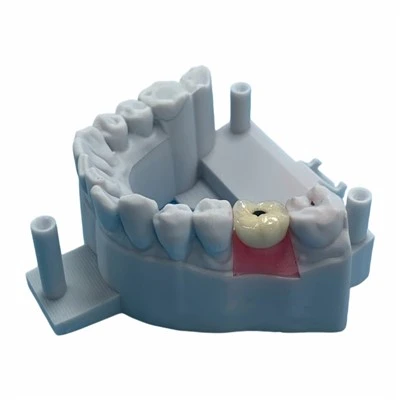
If you’re a clinic owner looking for reliable, high-quality implants that meet the unique needs of your patients, or you’re a patient who wants to learn more about what the procedure entails, reach out to our team to discuss options that fit your timeline and oral health needs.
Implant PFM References
- American Academy of Implant Dentistry. "Dental Implant Process and Healing Times." 2024.
- International Journal of Oral and Maxillofacial Implants. "Osseointegration: Factors Affecting Healing Time." 2022.
- Mayo Clinic. "Dental Implants: What to Expect During the Procedure." 2023.
- Journal of Clinical Periodontology. "Immediate Load Dental Implants: Indications and Outcomes." 2021.
Shenzhen Tuomei Dental Technology Co., Ltd.
We are one of the most professional dental implants manufacturers and suppliers in China, featured by quality products and low price. Please rest assured to buy discount dental implants made in China here from our factory. Welcome to view our website for more information.
Address: Room 301, Building C Fuhe Industrial Park No.18 Hexiu West Road, Zhancheng Community Fuhai Subdistrict, Bao’an District, Shenzhen, Guangdong, China
E-mail: dentallab.works@gmail.com
WebSite: https://www.sztuomeidentallab.com/
