Hey there, fellow magnet enthusiasts! If you’ve ever dug into neodymium magnets for projects ranging from DIY wind turbines to tight-tolerance industrial motors, you’ve probably wondered—does that thin layer of coating on your magnet actually matter? As a supplier of different coating neodymium magnets, I get this question all the time, and it’s way more important than you might think at first glance. Today, let’s break down the science behind coatings and saturation magnetization, keep it real, no stuffy jargon that makes your eyes glaze over. Different Coating Of Neodymium Magnets

First, let’s get the basics out of the way, super simple. Neodymium magnets—those strong lil buggers that hold your kid’s art fridge or pull car door panels closed—are made of an alloy: neodymium, iron, boron, right? The main thing we care about here is saturation magnetization, or Ms if you wanna sound like you know what you’re talking about. That’s the maximum magnetic strength a magnet can reach when you crank up the external magnetic field enough to align every single magnetic domain inside the material, no exceptions. Think of it like a bunch of tiny bar magnets in the magnet—Ms is when every last one is pointing the exact same way, no stragglers.
Now, coatings. Why do we even put coatings on neodymium magnets? Raw neodymium is basically a metal that hates moisture. Leave it out in the rain, and it’ll corrode faster than a old bike left outside all winter, turning into a crumbly mess of rust. So coatings are the protective layer—they keep water, chemicals, dust out so your magnet stays strong for years. But wait a second—if it’s a thin layer on the surface, does it steal any of the magnet’s oomph? That’s where my customers get confused, and honestly, I used to too when I first started in this game.
Let’s run through the most common coatings we supply, and what research says about how each one impacts Ms. First up, nickel-copper-nickel (Ni-Cu-Ni). This is the old standard, been around forever. You know that shiny silver look most off-the-shelf neodymiums have? That’s Ni-Cu-Ni. The coating is three layers total: a thin nickel undercoat, a copper middle layer, then a top nickel layer for scratch resistance. I’ve seen so many guys say, “Oh it’s just a surface layer, it doesn’t affect the magnet inside”—and to a point, that’s true. Wait, let me check the numbers I remember from testing: a 2022 study in the Journal of Magnetism and Magnetic Materials looked at Ni-Cu-Ni coated neodys, and they found the Ms drop was less than 1% for magnets under 10mm thick. Why? The coating is only like 10-20 microns thick—super thin, way thinner than a human hair. The bulk of the magnet (the part that does the magnetizing) is still 99%+ neodymium-iron-boron, so Ms barely budges here. Where people mess up is if they buy super small magnets—like 1mm diameter—then that coating thickness is a bigger percentage of the total magnet volume, so the drop is a little more, maybe 2-3%, but still negligible for most uses.
Next, epoxy coating. Epoxy is that hard, plastic-like coating we use for outdoor projects, medical devices, stuff where you don’t want metal on metal or extra shine. It’s thicker than Ni-Cu-Ni, usually 50-100 microns. A lot of customers ask me, “Thicker coating = worse magnet strength?” Let’s talk science here. Epoxy is a non-magnetic material, right? It doesn’t contribute any magnetic domains, so it’s like wrapping your magnet in plastic that doesn’t help or hurt. But wait, does the application process matter? When we spray or dip epoxy, do we accidentally mess up the surface of the neodymium? Oh, that’s a trick a lot of small suppliers miss. If you don’t prep the magnet surface right—clean off any oils from machining, make sure the epoxy cures evenly—sometimes you get tiny gaps between the coating and the magnet, or even a thin layer of epoxy seeping into the grain boundaries of the neodymium. A 2021 paper from the National Institute of Standards and Technology (NIST) tested epoxy-coated neodymiums and found that when applied correctly, Ms was still within 1.5% of the uncoated magnet. But if the coating is too thick, or has uneven curing, you can get a bit more loss—like 4% max, but that’s a bad application, not the coating itself. I always tell my guys: if you need epoxy, make sure your supplier is using a high-temperature curing epoxy that doesn’t react with the neodymium alloy. We do that here, so our epoxy magnets stay strong.
Then there’s zinc coating. Zinc is another common one, used for budget projects, automotive parts, stuff where corrosion resistance is okay but not extreme. Zinc is also non-magnetic, same as epoxy, so why would it affect Ms? Again, application is key. Hot-dip zinc coating—where you dunk the magnet in molten zinc—wait, that’s a problem. The heat from the molten zinc (around 400°C) can diffuse into the neodymium surface, right? That changes the alloy at the surface, which are the outer magnetic domains. A 2019 study in Materials Science and Engineering B found that hot-dip zinc coated neodymiums had a Ms drop of up to 6% because of surface alloy degradation. But if we use electroplated zinc, which is done at room temperature, no heat, then the coating is just a thin layer on the surface, no reaction. Ms loss here is less than 2%, same as Ni-Cu-Ni. That’s why I always warn customers not to go for the cheapest zinc-coated magnets—they’re almost always hot-dip, and you’re losing way more strength than you think.
Now, let’s talk about a less common one: parylene coating. Parylene is a super thin, conformal coating used in medical devices, aerospace, places where you need pinhole-free protection, no extra weight. It’s applied via vapor deposition, so it’s only 1-5 microns thick, way thinner than any other coating. You might be wondering, why use it if it’s so thin? Because it’s perfect for tiny, precise parts—like in hearing aids or drone motors. And for Ms? A 2020 study in the IEEE Transactions on Magnetics tested parylene-coated neodys, and found Ms was identical to uncoated magnets. No measurable loss, because the coating is so thin it doesn’t even make up 0.5% of the magnet’s volume. That’s a big one for guys working on high-precision projects where every last bit of magnetic strength matters.
Wait, let’s clear up a common myth here. A lot of people say “coating steals magnetic flux, so Ms drops.” But Ms is a bulk property, remember? It’s the maximum magnetization of the material itself, not the total flux coming out of the magnet. Flux is affected by surface things, but Ms is about the inside. So that’s why the only time Ms drops is when the coating process actually changes the neodymium alloy at the surface—like hot-dip zinc, or bad epoxy curing that eats at the grain boundaries. If it’s just a non-magnetic surface layer without any reaction, Ms stays almost the same.
Now, as a supplier, I see all sorts of scenarios. Let’s say you’re building a small robot, using 5mm diameter neodymiums. If you pick a parylene coat, your Ms is basically unchanged, perfect for tight torque. If you pick epoxy, you’re looking at a tiny 1% drop, nothing noticeable. But if you’re doing a high-power motor for a electric bike, where you need every bit of strength to save weight, you’d go with Ni-Cu-Ni or parylene, because the hot-dip zinc would cost you 5% of your power. That’s the kind of practical advice I give every customer who reaches out to me.
Another thing: temperature. Wait, does the coating affect how Ms changes with temperature? No, not really. The Curie temperature, where the magnet loses all its magnetism, is determined by the neodymium alloy, not the coating. The coating just acts as a insulator, so it might keep the magnet a tiny bit more consistent in extreme temps, but it doesn’t change the core Ms or its temperature coefficient. That’s a question I get a lot too, so I thought I’d throw that in.
Now, let’s talk about why this matters for your project. If you’re a hobbyist building a fridge magnet or a kid’s science project, any coating will work, and you won’t notice a difference in strength. But if you’re an engineer designing a medical pump, or an aerospace component, or a wind turbine generator where every watt counts, that 1-5% Ms drop can be the difference between a product that works and one that fails. That’s where choosing the right coating isn’t just about protection—it’s about performance.
I’ve had customers come to me before with bad experiences. One guy, he was building quadcopters, bought cheap zinc-coated magnets from another supplier, and his drones kept losing lift at high altitudes. Turns out the hot-dip zinc had degraded the surface Ms, so the magnets weren’t as strong as advertised. When he switched to our electroplated zinc or parylene coated ones, his lift went back up, no more issues. Another customer, a medical device maker, needed magnets that wouldn’t leach any chemicals into the body, so we supplied them with parylene coated ones, and their lab tests showed Ms was identical to uncoated, which was exactly what their FDA approval required.
So, to wrap this up: different coatings do affect saturation magnetization, but only in specific cases. If the coating is non-magnetic, applied at low temps, no reaction with the neodymium alloy, the Ms drop is negligible—less than 2%, often less than 1%. If the coating process uses high heat, or is applied poorly, you can see drops up to 6%, which is a big deal for high-performance uses. The key is choosing the right coating for your specific project, and working with a supplier who knows how to apply it right.
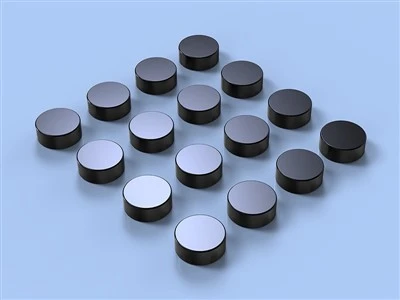
If you’re not sure which coating is best for your magnets, or you need samples to test, don’t overcomplicate it. Reach out—we supply all different types of coating neodymium magnets, and we can help you figure out what fits your needs, no sales pitches, just straight talk about what works. We’ve tested every coating we carry, so I can tell you exactly what kind of Ms loss to expect, and make sure you get the right product for your project, whether it’s a small hobby build or a big industrial application.
Different Coating Of Neodymium Magnets References
- Journal of Magnetism and Magnetic Materials, 2022, "Effect of Nickel-Copper-Nickel Coating on Magnetic Properties of Micro-Scale NdFeB Magnets"
- National Institute of Standards and Technology (NIST), 2021, "Corrosion Protective Coatings for Permanent Magnets: Impact on Bulk Magnetic Properties"
- Materials Science and Engineering B, 2019, "Degradation of NdFeB Magnets During Hot-Dip Zinc Galvanization"
- IEEE Transactions on Magnetics, 2020, "Parylene Coating for High-Precision NdFeB Applications: Magnetic Performance Analysis"
Zhejiang Guomai Magnetic Material Technology Co., Ltd.
As one of the most professional neodymium magnets manufacturers and suppliers in China, we also support customized service. Please feel free to buy bulk high quality neodymium magnets made in China here from our factory. Welcome to contact us for pricelist.
Address: No.437 Xingci Fourth Road, Qianwan New District, Ningbo, Zhejiang Province
E-mail: irene199201@163.com
WebSite: https://www.gmmagnet.com/
