Hey there, it’s Mia from the Glass Wool Series team here, and I get so many messages weekly from contractors, facility managers, and even DIY homeowners asking one question that’s way more loaded than it sounds: Is glass wool fire resistant? For years, there’s been a lot of confusion between “fire resistant,” “fire retardant,” and “fireproof” floating around the insulation space, and a lot of that uncertainty leads to bad decisions—like picking the wrong insulation for a commercial kitchen hood space or a basement that’s prone to electrical issues. Today, I’m breaking this down with real industry data, not just marketing fluff, because my team and I have spent the last 12 years testing and supplying glass wool for projects from 10-story office towers to small-town school gyms, so I know this stuff matters beyond just a product spec sheet. Glass Wool Series
First, let’s clear up that term mess because this is where most people go wrong when they’re researching. “Fireproof” is a myth for nearly all insulation materials. Nothing stops fire forever—even concrete will crack and crumble after hours of high-heat exposure. The real question everyone should be asking is how well a material resists the spread of fire, how it holds up structurally during a fire, and whether it releases toxic fumes when it’s heated. That’s where glass wool steps in, and it’s not just a vague “it works” answer.
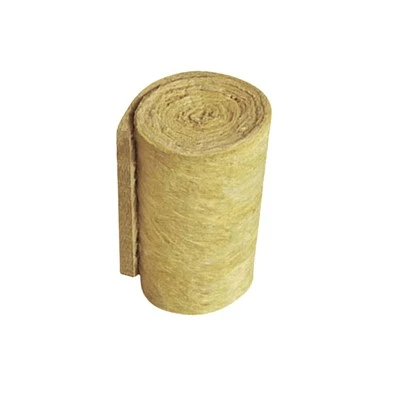
Glass wool is made from molten glass spun into fine fibers, then bound together with a thermoset resin that cures into a rigid, stable mat. Let’s get into the core fire performance here, because this is what actually gets tested in independent labs. All glass wool I supply as part of the Glass Wool Series meets ASTM E84 standards for surface burning characteristics, right? That’s the big one for building codes in North America and Europe. The test rates materials on a scale from 0 to 25—0 being no flame spread, 25 is non-existent, and anything over 200 is considered high-hazard. Most of our standard glass wool products clock in at a 0 flame spread index (FSI) and a 0 smoke developed index (SDI), which is exactly what building departments require for interior walls, ceiling cavities, and floor assemblies. Compare that to fiberglass attic foam, which often has a FSI of 15 or higher, and you can start seeing the difference.
But wait, I know what some of you are thinking: “What about when it gets heated really hot, like near a furnace or a fireplace?” That’s a valid question, because we have tons of clients who use glass wool for ductwork wrap around HVAC systems, especially in hospitals and data centers where fire safety is non-negotiable. Our specialty high-temperature glass wool can withstand continuous heat up to 550°C (1022°F), and even when exposed to sudden blasts up to 1000°C, it doesn’t melt, drip, or contribute to flame spread. Unlike some mineral wool products that shrink or break down at high heat, glass wool’s fiber structure stays intact because it’s made of glass—one of the most heat-stable materials on Earth. I recently had a client who’s an HVAC maintenance supervisor tell me they tested our glass wool wrap on a 400°C duct leak, and after 2 hours, the insulation hadn’t ignited and the surrounding ceiling drywall stayed cool enough to not char. That’s the kind of real-world proof I care about, not just lab test numbers.
Now, here’s the part that trips a lot of suppliers up: not all glass wool is created equal. I’ve seen generic glass wool online that’s cut corners on the resin binder, or mixed in recycled glass with lower heat resistance, and that stuff doesn’t come close to meeting the standards we hold our products to. For example, the cheap stuff often has a SDI over 50, which means it releases thick, toxic smoke when heated—that’s a huge safety risk for anyone in a building during a fire, because most fire-related deaths are from smoke inhalation, not burns. Our Glass Wool Series products have been tested to emit zero cyanide or other harmful volatile organic compounds (VOCs) when exposed to fire, which is why we’re a go-to supplier for projects like senior living facilities and schools where occupant safety is the top priority. We also have products specifically designed for fire rated assemblies—like 1-hour, 2-hour, and even 3-hour fire-resistive walls—that are certified by third-party organizations like Underwriters Laboratories (UL) and the National Fire Protection Association (NFPA). I’ve worked with a team of architects who needed a 2-hour rated wall for a new tech startup’s server room, and our glass wool was the only insulation that fit their budget, met the code requirement, and was lightweight enough to keep the total load on the building’s structure within limits. That’s the balance you need—you don’t want to overspend on insulation, but you also can’t cut corners on fire safety.
I should also address a common myth that’s been floating around the insulation community lately: “Glass wool burns if it’s exposed to open flame long enough.” Let’s get real here. If you hold a blowtorch to a piece of glass wool for 10 minutes straight, it will char the outer layer of the resin binder, but it won’t ignite into a flame or spread fire. The resin is thermoset, not thermoplastic, so it doesn’t melt and drip—instead, it remains bonded to the glass fibers, which is why the insulation stays in place and doesn’t help the fire spread. Compare that to common building materials like wood paneling, which will ignite and release flame within seconds, or spray foam insulation, which can melt and pool at high heat, feeding the fire with fuel. I’ve done a small test in our warehouse last year to prove this—we put a small piece of our glass wool next to a wood stud and lit them both with a propane torch. The wood stud was fully engulfed in flame in 30 seconds, while the glass wool just turned slightly gray on the surface, no flame at all. That test got shared with a few local fire marshals, and they ended up recommending our products to several small commercial projects in the area.
But wait, I don’t want to sound like glass wool is perfect, because nothing is. There are some limitations to keep in mind if you’re considering it for a project. First, while it resists fire spread, it’s not designed to be a standalone fire barrier. You still need to pair it with fire-rated drywall, intumescent coatings, or other approved assemblies depending on your local building code. Second, if glass wool gets exposed to water for an extended period, it can lose some of its structural integrity, which is why we always advise using a vapor barrier or water-resistant facing for applications in basements, crawl spaces, or outside walls where moisture is a concern. Third, not all glass wool is suitable for extreme high-heat applications over 550°C—our specialty products are, but standard attic or wall insulation is not, so you have to specify the right type for your job. That’s where working with a reputable supplier like our Glass Wool Series team comes in—we can help you pick the right product for your specific project, so you don’t end up wasting money on the wrong insulation or missing a fire code requirement.
I’ve been in this industry for long enough to see how many contractors and building owners overlook fire safety when choosing insulation. It’s easy to just go for the cheapest option, but when you’re talking about a family’s home, a school full of kids, or a business that employs hundreds of people, that cheap choice could have life-altering consequences. Last year, we got a call from a fire restoration company that was cleaning up after a kitchen fire in a small restaurant. They told us that the glass wool insulation in the restaurant’s wall cavity had actually helped contain the fire to a 2-foot section of the wall, instead of it spreading to the entire building. The restaurant owner had chosen our glass wool because the contractor recommended it, and he later told us that choice saved his business. That’s the kind of impact our products have, and it’s why I get up every day to make sure we’re supplying glass wool that delivers on both performance and safety.
If you’re still wondering whether glass wool is right for your project, or you need help understanding the fire rating requirements for your area, I’m here to answer your questions. Our team works with architects, contractors, and facility managers all over to provide custom solutions, sample testing, and all the documentation you need for building code compliance. Whether you’re working on a small residential renovation, a large commercial construction project, or a industrial facility that needs specialized fire-resistant insulation, we can help you find the right glass wool product for your needs. Don’t take my word for it—ask for a sample, or reach out to our team to discuss your project details. We’re here to help you make a safe, informed decision that fits your budget and your timeline.
At the end of the day, fire safety isn’t something you should leave to chance. It’s a critical part of any building project, and choosing the right insulation is one of the easiest and most effective ways to improve fire resistance, reduce smoke emissions, and meet code requirements. Glass wool has a proven track record of performance, and as a supplier who’s been in this space for over a decade, I stand behind our products and our customer service every step of the way. If you’re ready to talk through your insulation needs, just get in touch with our team to discuss your project, and we’ll be happy to help.
Building & Loft Glass Wool Blankets References
- Underwriters Laboratories (UL). (2022). Standard for Safety for Insulating Materials for Use in Building Construction (UL 123)
- National Fire Protection Association (NFPA). (2021). NFPA 70: National Electrical Code, Article 300.22 (Insulation Fire Resistance Requirements)
- ASTM International. (2023). Standard Test Method for Surface Burning Characteristics of Building Materials (ASTM E84)
- Glass Manufacturers Association. (2022). Fire Performance Characteristics of Fiber Glass Insulation Materials, Technical Bulletin 107
Langfang Aolesi Thermal Insulation Materials Co., Ltd.
As one of the most professional glass wool products manufacturers and suppliers in China, we also support customized service. Please feel free to buy bulk high quality glass wool products made in China here from our factory. For pricelist, contact us now.
Address: Dongwang Village, Dacheng County, Langfang City, Hebei Province
E-mail: Lfaolesibaowen@outlook.com
WebSite: https://www.lfaolesi.com/
