Hey there,
If you’ve ever fired up a meat bandsaw blade first thing in the morning, lined up a load of fresh brisket, and hit the trigger only to watch that sharp, sturdy blade start to bend mid-cut—you know how frustrating that is. It slows production, wastes meat, ruins cuts, and even puts you at risk of damaging your saw or hurting yourself. As someone who’s spent the last 12 years working with meat bandsaw blades (and running a supply that’s built for small butcher shops, processing plants, and independent meat cutters), I’ve gotten dozens of calls every month from folks asking the exact same question: “Why is my meat bandsaw blade bending when cutting?” Meat Bandsaw Blade
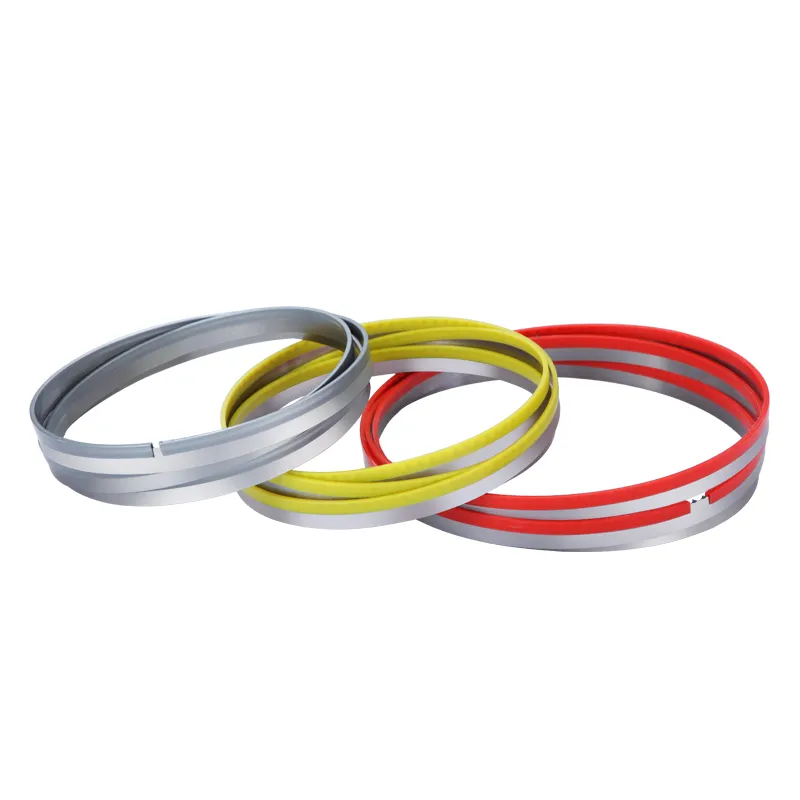
It’s not a failure of the blade, not usually. Most of the time, it’s a mix of small, easy-to-fix mistakes with setup, maintenance, or even how you’re actually using the saw. Let’s break this down like I’d break down a slab of shoulder—straight to the meat of the problem (pun totally intended, sorry not sorry) so you can get back to cutting straight, no bend, no hassle.
First up, and this is the most common culprit I see: blade tension that’s too low. I can’t stress this enough. Meat bandsaw blades aren’t the flimsy blades you use for home woodworking; they’re thin, flexible steel designed to bend around the saw wheels and cut through dense meat and bone, but only when they have enough tension. Think of it like a guitar string—too loose, and it wiggles, bends, and won’t make a clean tone. Same logic applies here.
But wait—how do you know if your tension is right? A lot of guys I talk to just crank the tension lever until they hear a click and call it good, but that’s not the right way for meat bandsaws, which typically run tension between 18,000 to 25,000 PSI, depending on the blade gauge (thinner blades for small cuts need less tension, thicker blades for bone need more). A simple test: push your thumb into the top of the running blade, halfway between the two wheels. If it bends more than 1/4 inch, your tension is too low.
Why does low tension make the blade bend mid-cut? When you’re pushing through a tough section of meat or a small bone, the lack of tension means the blade can twist or deflect. Instead of cutting straight, it “gives” under pressure, bending to the side. Over time, this constant bending even stretches the blade permanently, making it useless faster. I once had a small butcher client who was getting terrible bends for weeks—turns out he was only tensioning his blade to 12,000 PSI, half what it should have been. We adjusted it, and he went from wasting 50 pounds of meat a week to zero. That’s the kind of fix that changes a whole week.
Next, wheel alignment. Both the top and bottom saw wheels on your bandsaw need to be perfectly in line, not tilted forward or back, left or right. If they’re even a tiny bit off (like 1/32 of an inch), the blade will start to wander, bend, or even come off the tracks. For meat bandsaws, the wheels should be aligned so the blade runs dead-center on each wheel’s crown. The crown is the slight dome shape on the face of the wheel—designed to keep the blade tracking straight, not leaning.
If the wheels are misaligned, every time the blade hits a dense spot, it has to fight against the tilt of the wheels. That force makes it bend away from the cut line. I’ve seen clients try to fix this by cranking tension higher, which only makes it worse—too much tension on a misaligned wheel will make the blade snap, not bend. Last year, a processing plant called me panicking because their new blade bent so bad it left a 2-inch notch in a $200 ham. We did a quick alignment check and found the bottom wheel was tilted 2 degrees forward. They adjusted it, and the problem was gone in 10 minutes. No new blade needed, no wasted meat.
Another big one: blade guide condition and positioning. The blade guides are those two sets of hardened steel blocks (or sometimes carbide, depending on the saw) that sit just above and below the cutting area, holding the blade steady as it moves. If those guides are worn down, loose, or positioned too far away from the blade, they can’t do their job. The blade is free to flop around as it cuts, which leads to bending.
Even worse: if the guides are adjusted too tight, they’ll dig into the blade, causing friction, but the bigger issue for bending is too much gap. Most meat saw guides should be set so there’s only 0.005 to 0.010 inches of clearance between the guide and the back of the blade (the smooth side, not the toothed cutting edge). When the gap is bigger than that, the blade moves around like a loose tooth, bending every time it hits resistance. Also, if the guides themselves are chipped or worn, they’ll create uneven pressure on the blade, making it lean. I always tell clients to check their guides every week—wipe them down, make sure they’re tight, and if they have nicks, replace them. It’s a $20 part that saves you from hundreds in wasted meat.
Wait, let’s talk about the blade itself—did you get the right blade for your job? A lot of guys grab a generic blade off a big box supply store and wonder why it bends when cutting bone. Not all meat bandsaw blades are created equal. If you’re cutting mostly soft muscle and fat, a 0.035 gauge (thinner) blade is fine—flexible enough for clean cuts. But if you’re cutting bone, a thinner blade won’t have the structural rigidity to handle the pressure. It will bend under the torque of cutting through bone, because it’s too thin to resist the side force.
Also, blade pitch matters. Pitch is the number of teeth per inch (TPI). Too few teeth for dense meat or bone, and each tooth has to take a huge chunk of material, creating too much side pressure that bends the blade. Too many teeth for soft meat, and they clog up, causing the blade to bind, which also makes it bend. For example, if you’re cutting frozen meat and bone, you need a 3 TPI (teeth per inch) blade, not an 18 TPI general purpose blade. I see this mistake all the time: a small butcher bought an 18 TPI blade for cutting steer bone, and by the third day, the blade was so bent he had to throw it away. We swapped him to a 4 TPI bone blade, and he’s been happy ever since.
Then there’s speed and feed rate. The speed of the saw and how fast you push the meat into the blade is a huge, often overlooked factor. If you run the blade too slow, or push the meat too fast, the teeth can’t cut through the material cleanly. Instead of shearing the meat, they crush or tear it, creating binding force that makes the blade bend. For meat bandsaws, the right speed depends on the blade: general purpose blades run at 1,500 to 2,500 SFPM (surface feet per minute), while bone cutting blades run a bit slower, around 1,200 to 1,800 SFPM.
As for feed rate, you should be pushing the meat at a steady, consistent pace—like you’re slicing through butter, not forcing it. If you slam the meat into the blade, or stop and start constantly, that’s uneven pressure that makes the blade bend. A client of mine was pushing brisket too fast to keep up with a holiday order, and his blade bent so bad it left a wavy cut. Once he slowed down to a steady pace, the bends were gone. It’s not about rushing—it’s about consistent, controlled movement.
Oh, and blade wear from improper sharpening. If your blade teeth are dull, chipped, or sharpened unevenly, that’s going to cause bending too. Dull teeth require more force to cut, so you push harder, leading to side deflection. Uneven sharpening means some teeth are shorter than others, so the blade cuts unevenly, pulling to one side and bending. A lot of small butchers try to sharpen their blades at home, but if you don’t have the right tools, you can mess up the tooth angle or height. I always recommend sending blades to a professional sharpener who specializes in meat bandsaw blades—they use CNC machines to get each tooth exactly the same, which keeps the blade cutting straight. A dull, poorly sharpened blade is like a dull knife—you have to work harder, and that work leads to mistakes like bending.
Wait, let’s not forget about temperature and material buildup. Over time, meat fat and grease can build up on the blade, especially near the guides. This creates friction, which warms the blade and makes it softer. A softer blade is more prone to bending under pressure. Also, if the blade runs too hot from too much friction, the steel can lose its temper, making it flexible instead of rigid. That’s why it’s important to clean your blade and guides regularly—wipe down the blade with a food-safe degreaser every shift, and make sure excess fat doesn’t get into the guide area. I had a client who forgot to clean his blade for a month, and the buildup made the blade so soft it bent during a routine cut of pork shoulder. A quick clean and oil (food-safe, of course) fixed it right up.
Is there a chance it’s a bad blade? Sometimes. Low-quality blades made from cheap steel can have inconsistent thickness, or the weld (the joint where the two ends of the blade are fused) is weak. A bad weld can flex or break, leading to bending mid-cut. That’s why it’s important to work with a supplier who uses high-carbon steel, properly formed welds, and quality control. As someone who supplies meat bandsaw blades, I test every batch before it goes out to make sure the gauge is consistent and the weld is strong—because I know a bad blade causes more problems than just bending.
So let’s recap, because this is a lot: when your meat bandsaw blade bends, it’s almost never one single thing. It’s usually a mix of small setup or maintenance issues: too low tension, misaligned wheels, worn guides, wrong blade for the job, wrong speed/feed, dull teeth, or a dirty blade. Fixing each of these not only stops the bending, it makes your blade last longer, cuts cleaner, and keeps you safe.
If you’re still having trouble after checking all these steps, that’s where a trusted supplier comes in. I’ve spent years troubleshooting these exact issues with butchers and processing plants, so I can help you diagnose what’s going on with your specific saw and blade. Whether you need to adjust your tension, get the right blade for your bone cuts, or switch to a better sharpener, I’m here to help.

If you’re tired of wasting meat, dealing with bent blades, and slow production, reach out to talk through your needs. We can go over your current setup, what you’re cutting, and find the right solution for your meat bandsaw.
Metal Bandsaw Blade References:
- Forest Products Society. (2008). Bandsaw Blade Tension and Alignment for Industrial Applications.
- Meat Industry Suppliers Association. (2021). Maintenance Guidelines for Meat Processing Bandsaws.
- Steel Manufacturer’s Association. (2019). Structural Properties of High-Carbon Steel for Cutting Blades.
- Butcher Shop Operations Manual. (2022). Blade Selection and Best Practices for Meat Cutting.
- Industrial Power Transmission and Motion Control. (2020). Blade Deflection in Bandsaw Cutting Operations.
Zhejiang Sipu Sawing Industry Co., Ltd.
With abundant experience, we are one of the most reliable meat bandsaw blade manufacturers and suppliers in China. Please feel free to buy high quality meat bandsaw blade made in China here from our factory. We also accept customized orders.
Address: No.1129 Cangling Road, Huzhen Town, Jinyun County, Lishui City, Zhejiang
E-mail: ls@sipu.onaliyun.com
WebSite: https://www.sipu-saw.com/
