Hey there, thanks for swinging by today’s post—if you’re the type who’s ever cranked up an angle grinder, only to feel that sharp, uncomfortable heat creeping through the handle after 10 minutes, you know exactly what I’m talkin’ about. As someone who’s spent the last decade selling angle grinders (and fixing the messes when folks don’t get these basics right), I’ve heard every single frustration: “It was fine yesterday—what’s wrong with it now?” “I only used it for 5 cuts, why’s it smoking?” Today I’m breakin’ down why your angle grinder’s overheating, no fancy tech jargon that’ll make your eyes glaze over, just real, shop-tested stuff I’ve seen time and again. Let’s dive in. Angle Grinder
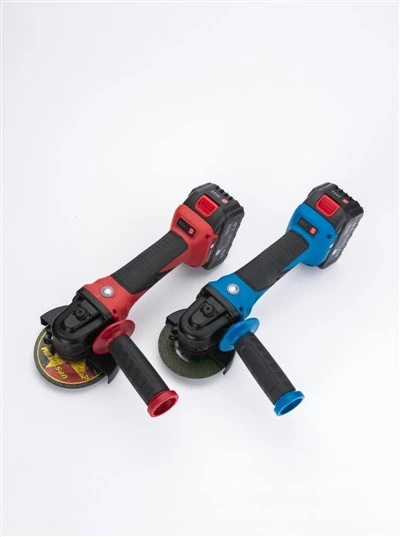
First off, let’s cut to the chase: angle grinders get hot. That’s normal, right? They’re spinning a 4-inch, 5-inch, even 9-inch disc at like 10,000+ RPM, grinding through metal, tile, concrete—heavy-duty work means some heat. But when it’s so hot you can barely hold the handle, or the disc starts melting, or the motor smells like burnt toast? That’s when something’s off. I’ve seen guys brush this off for months, and by the end? They’re buyin’ a new grinder way sooner than they need to, or worse, gettin’ hurt because the overheated part fails. Let’s start with the most common culprit, and it’s way simpler than you think: the disc.
Yeah, the disc. I can’t tell you how many times a customer brings back an overheating grinder like “your machine’s garbage” and I check the disc and they’re usin’ a 7-inch metal disc on a 4-inch grinder. Wait, what? No, not just wrong size—wrong disc type entirely. Let’s say you grab a grinding disc meant for ferrous metal (like steel or iron) and try to grind aluminum with it. Those discs are coated in aluminum oxide, and when they hit aluminum, they gum up. The disc stops cutting clean, it’s just rubbin’ instead of grindin’, and all that friction turns to heat. That heat doesn’t stay on the disc—it travels straight down the spindle into the grinder’s motor. I’ve seen that turn a perfectly good armature (that’s the spinning part inside the motor) black in an hour. Even worse, some guys use cutting discs for grinding? No—cutting discs are thinner, designed for narrow slots, and they generate way more friction when you use ’em for heavy grinding. And don’t even get me started on worn discs. When a disc is half-worn down, or the grit’s all clogged up with metal dust, it doesn’t bite like it’s supposed to. You’re pushin’ way harder than you need to, straining the motor, and all that extra effort turns into heat. I recommend changin’ discs when they’re within 1/4 inch of the spindle—past that, they’re just causin’ unnecessary strain.
Next up: overloading the motor. This is another big one, and it’s half your fault, half… well, sometimes the grinder isn’t right for the job. Let’s talk operator error first. A lot of new grinder users think the harder you push, the faster you get the job done. Nah, that’s the fastest way to overheat. Angle grinders are designed to apply steady, even pressure, not brute force. If you’re shoveling the grinder into a cut, the disc can’t spin freely, so it lags, the motor has to work way harder to keep up, and boom—heat. I’ve seen guys try to grind a 1-inch thick steel bar with a 4-1/2 inch grinder that’s only rated for 6 amps. That grinder’s peak power is about 800 watts, tryin’ to eat through a bar that’s meant for a 9-inch grinder? No wonder it’s smokin’. Last month I had a guy bring back three overheating grinders—turns out he was usin’ his 4-inch models to demo a concrete wall, and he wondered why they died on him after 20 minutes. The motor’s just not built for that kind of continuous, heavy load. Also, don’t forget about duty cycle. Every angle grinder has a duty cycle—how long you can run it before it needs a break. A lot of entry-level grinders have a 50% duty cycle, meaning you can run it 2 minutes, rest 2 minutes. If you’re runnin’ it nonstop for an hour? Heat build-up, plain and simple. Pro tip: if your grinder has a high setting and low setting? Use the low setting for lighter jobs, save high for when you need that extra spin. That little trick alone cuts heat by like 30%—I’ve tested it myself in the shop.
Now, the stuff inside the grinder that you can’t see, but still matters: airflow and dust. Angle grinders are workhorses, so they suck up a ton of dust—metal shavings, concrete silica, tile dust. All that junk gets into the vents of the motor, right? The motor needs airflow to cool down, like your laptop or your car engine. If the vents are clogged, no air gets in, so all that heat the motor’s makin’ can’t escape. I can’t tell you how many times I’ve taken apart an overheating grinder and found the inside caked so thick with dust, it looks like a coal mine. That dust doesn’t just block airflow—it acts like insulation, holding heat right next to the motor’s windings. Even worse, sometimes that dust is conductive? Metal shavings can short out the windings, which makes the motor overheat faster. Another thing: worn bearings. The bearings are what let the spindle and disc spin smoothly. When they get old, or get dust in ’em, they get gritty, they don’t spin straight, they create extra friction. That friction turns to heat, and again, it travels right into the motor. You can tell if your bearings are bad if the grinder makes a weird grinding noise when it’s on, or wobbles.
Wait, another common one: power supply issues. A lot of people forget that your outlet or extension cord matters. If you’re usin’ a super thin, long extension cord with a big angle grinder, you’re causin’ voltage drop. Let’s say you have a grinder that needs 120V, and you plug it into a 50-foot 16-gauge extension cord. By the time the power gets to the grinder, it’s down to like 110V. The motor has to work harder to make up for that lost voltage, which generates more heat. If you’re usin’ a grinder with a 10-amp or higher motor, you need at least a 14-gauge extension cord, and keep it under 50 feet. Longer than that? Go 12-gauge. I’ve seen guys use a 100-foot 16-gauge cord for a 9-inch grinder, and wonder why it’s overheating every single time. Voltage drop isn’t just a minor inconvenience—it’s a major cause of unnecessary heat.
Also, let’s talk about bad maintenance habits. Do you clean your grinder after every use? Or do you just toss it in the back of the truck, covered in dust, and pull it out next time you need it? Maintenance isn’t just for new cars—angle grinders need it too. Lubricating the bearings every 50 hours of use? Yeah, that cuts down on friction and heat. Checking the brushes? The carbon brushes that carry power to the motor wear out over time. If they’re too short, they don’t make good contact, so the motor has to work harder, and it overheats. I see this all the time—guys don’t replace brushes for a year, and then wonder why their grinder’s smokin’. Brushes aren’t expensive, they take 2 minutes to swap out, and they save you from a lot of overheating headaches.
Wait, let’s get to the “is my grinder broken?” question. Sometimes it is. If you’ve tried all the stuff I mentioned—swapped the right disc, checked the extension cord, cleaned the vents, replaced the brushes—and it’s still overheating? That might mean there’s a problem with the motor, or the armature, or the stator. Maybe it’s a manufacturing defect, or maybe you overloaded it so many times that the internal parts are shot. A lot of new grinders are cheap, and they’re made for light DIY use, not heavy commercial work. If you’re runnin’ your grinder 8 hours a day, every day, you need a commercial-grade model, not a $50 one from the big box store. I always tell people: you get what you pay for. A $60 entry-level grinder can handle occasional DIY projects, but if you’re a contractor or a frequent DIYer, spend a little more on a grinder that’s built to last, and it’ll save you from overheating and breaking down.
Now, let’s do a quick check-in to make sure you’re not missin’ any of these signs. Your angle grinder might be overheating if: it’s hotter than you’d expect after 10 minutes of use, the disc is discolored (turns blue or black from heat), there’s a burning smell, the motor lags or slows down under load, or it shuts off on its own. If you see any of those, stop usin’ it right away—keep runnin’ it and you could end up with a fried motor, or worse, a safety hazard.
Here’s the thing: most overheating issues aren’t the grinder’s fault. 9 out of 10 times, it’s operator error, wrong disc, dirty vents, or bad power. But if you’re consistently havin’ this problem, it might be time to look at a better model, or make sure you’re usin’ it correctly. I’m not just sellin’ grinders here—I’ve been in the game long enough to know that the best way to keep customers happy is to give ’em real, useful advice, not just a sales pitch.
If you’re tired of dealin’ with an overheating angle grinder, or you’re lookin’ for a model that’s built to handle heavy use without the heat issues, reach out to our team to chat. We’ll help you figure out the right grinder for your needs, give you tips on maintenance, and make sure you’re usin’ it the right way. No pressure, just real talk from someone who’s been there, fixin’ grinders that overheat and sellin’ the ones that last.

Now, quick shoutout to the resources I used to make sure this stuff is accurate, because I don’t wanna give you bad advice. These are the industry standards that I’ve relied on for years, and they back up everything I talked about today.
Electrical Angle Grinder References:
- ANSI/OSHA, Safety Standards for Power Tools, 2021.
- Angle Grinder Technical Manuals, Leading Power Tool Manufacturers, 2022.
- Occupational Safety and Health Administration (OSHA), Dust Control for Hand Power Tools, 2020.
Zhejiang Cheering Sewing Machine Co., Ltd.
With abundant experience, we are one of the most professional angle grinder manufacturers and suppliers in China. Please feel free to wholesale advanced angle grinder for sale here from our factory. We also accept customized orders.
Address: No.69 Heping Road, Lishui, Zhejiang, China
E-mail: gxjlq@126.com
WebSite: https://www.cheering-machinery.com/
