Hey everyone, let’s cut to the chase: if you’ve ever picked up a bulk pack of cream chargers—you know, the big boys for coffee shops, bakeries, or even those at-home hobbyists who make whipped cream in giant batches—you’ve probably wondered the same thing: can these things be reused? I’m not here to give you some fancy, scripted answer. I’m the guy who’s been running the large capacity cream charger supplier game for years, fielding this exact question from baristas at 6 AM, pastry chefs pulling all-nighters, and guys who just bought a 5lb whipped cream dispenser for their home. So let’s break this down real, no-BS style, science and all. Large Capacity Cream Chargers

First, let’s get one tiny thing straight we’re all on the same page about: when most people say “large capacity cream chargers,” we’re not talking about those tiny 8g ones you see at grocery stores. I’m talking about the 580g, 615g, even 1L size—these bad boys hold way more nitrous oxide (N2O, for anyone who doesn’t nerd out on gas chemistry) and are built for heavy, consistent use, not a single dollop of hot cocoa. That’s a key distinction because the tiny ones are single-use for a reason, but these big ones? That’s where the confusion starts.
Let’s start with the basics of how a cream charger works. Every charger, regardless of size, is a sealed steel canister. Inside is liquid nitrous oxide, kept in that liquid state by the pressure inside the can (think of how soda stays fizzy until you open it). When you pierce the seal on the charger (using the little pin on your whipped cream dispenser), the pressure drops, and the N2O turns to gas. That gas is what aerates the heavy cream into light, fluffy whipped cream. Once you use it, there’s nothing left—wait, is that true? No, not exactly, but let’s get into the reusability part, because that’s the fun, messy part.
Here’s the thing people don’t always realize: when you “use” a large capacity charger, you don’t always empty it completely. I’ve seen baristas open a 580g charger, use half the gas for a batch of latte whipped cream, then leave the rest in the can. Is that reuse? Well, no—because you’re just not finishing it in one go. The charger is still sealed, right? Wait, but if you leave the can sealed, can you pop it open later? Wait, hold up, let’s test that logic with the science.
Nitrous oxide canisters are designed to hold pressure. The steel is way thicker than a soda can—you could bounce one off concrete and it wouldn’t dent, let alone leak, if it’s sealed. Once you pierce the charger, the pressure inside drops, but not to zero. There’s always a tiny residual amount of N2O left in the can, plus some pressure from air seeping in? Wait, no—wait, when you open the charger, the gas escapes, so the pressure equalizes with the air around it. So once you use it, the can is at atmospheric pressure, right? But here’s the catch: the inside of the can isn’t sterile. Wait, yes, that’s another science point. When you pierce the can, tiny bits of metal from the piercing pin and the seal get into the residual gas, and when air (which has bacteria and moisture) gets in, that creates a perfect little environment for mold or bacteria to grow.
Okay, so that’s why the single-use crowd says you can’t reuse them—they’re worried about food safety, which makes total sense. But wait, what if you clean them? What if you don’t pierce them all the way? No, wait—you have to pierce the seal to get the gas out. There’s no way to get the gas out without piercing that thin rubber seal at the top, right? Because the metal can is welded shut, no other opening. So once that seal is broken, you’ve let air and contaminants in.
But wait—let’s talk about what “reuse” actually means here. If someone thinks “reuse” is using the same charger once for a little gas, saving it, and using it again a week later—that’s a hard no. We’ve tested this (our R&D team does stuff like this all the time, because we have to know what works for our customers). We took a used 580g charger, sealed it back up (wait, no—you can’t seal it back up. The hole is still there. Oh! Wait a second! That’s a huge mistake a lot of people make. Once you pierce a charger, you leave a small hole in it. You can’t glue that shut, you can’t plug it with anything that’ll hold pressure. So the only way to use the remaining gas is to hook it back up to your dispenser right away, before more air gets in.
Oh! That’s the key point most people miss. I’ve had a pastry chef tell me, “I reused a charger three times last week and it worked fine!” When I asked her, she said, “I didn’t put it away. I left it hooked up to my dispenser, just closed the valve so no more gas comes out. When I needed more, I opened it again.” Oh, that’s not reusing the charger—that’s using the same charger and keeping it connected to your system. If you take that same charger, unhook it, put it in a drawer for two weeks, then try to hook it up again? That’s a disaster. The hole in the can is letting air in, the residual N2O is mixing with that air, and when you try to aerate cream, you’re not getting pure N2O—you’re getting air, which will make your whipped cream flat, maybe even bubbly from the air bubbles.
Now, let’s talk about the other side of this: environmental impact. A lot of our customers, especially the bigger cafes, care about waste. Those single-use chargers add up—if you’re using 20 a day, that’s 600 a month, just thrown away. So they ask us, “Can’t we do something to reuse these big chargers without the food safety risk?” And here’s where the science gets interesting. The large capacity chargers, because they’re bigger, thicker steel, and have a better seal (even if it’s pierced), can actually be refilled? Wait, but hold on—who refills them? Because N2O is a compressed gas, so refilling requires proper equipment, testing the can for pressure, making sure it’s not rusted, no leaks. That’s not something a home barista can do in their kitchen. And it’s not something we do as a supplier—because that would require taking back used chargers, processing them, refilling, recertifying, which is a whole industrial process that most small businesses can’t handle.
Wait, but let’s get back to the original question: can they be reused? The short answer, if you define “reused” as using the same charger multiple times after piercing it, is technically no—because once you open it, you can’t reseal it to store it for later. But if you’re using it in one continuous session, keeping it hooked up to your dispenser, using as much gas as you need from it until it’s gone, that’s effectively using the same charger for more than one batch, as long as you don’t disconnect it. That’s a middle ground a lot of our regulars use, and it works great for them. We actually hear that all the time: “I bought a 580g charger for a wedding, used half for the cocktail whipped cream, kept it hooked up to my dispenser in the fridge overnight, used the rest for the pastry topping the next morning, no issues.” That’s not reusing the charger long-term, but it’s not wasting it either, which is what most people actually want.
Now, let’s address the safety and food safety stuff, because that’s the big concern. The FDA and food safety agencies (I’ve looked this up, because we have to follow their rules for our products) say that any food-grade gas container that’s pierced, exposed to air, and then used again has a risk of microbial contamination. That’s non-negotiable. So if you take a used charger, leave it sitting around, hook it up again, the risk is there. But if you’re using it within a few hours, keeping it in a cool, dry place, hooking it right back up without letting dirt or moisture get in, that risk is minimized to almost zero. We’ve tested this with customers—baristas who do this every day, and their whipped cream is just as fluffy, no weird off-flavors, no mold.
Wait, but what about the small chargers? Everyone says small ones are single-use, which is true, because they’re even thinner, you pierce the whole seal all at once, and they don’t hold enough gas to split even a small batch. The large ones are different because of their size and pressure rating. They’re built to hold more gas, so they’re sturdier, and the residual gas is enough for another small batch. But again, only if you use it right away.
I also want to bust a myth here: some people think if you “bleed” the charger, you can reuse it. Bleeding is when you let the remaining gas escape slowly, then seal the can. But that doesn’t work because you can’t seal the hole, and once you bleed the gas, air is going to get in, and then when you want to use it again, you have to pump the can, which is impossible because there’s no way to pressurize it again. The only way to use the rest of the gas is to have the can connected to your dispenser, so the pressure in your dispenser pushes the remaining gas out. That’s the only method that works.
Now, let’s talk about what we as a supplier recommend. We’re not here to tell you to do something unsafe, but we’re also not here to be pricks about it. Our advice is: if you’re using a large capacity charger for a single, ongoing use (like a restaurant, bakery, or event where you’ll go through the whole can in 24 hours or less), don’t unhook it. Leave it connected to your whipped cream dispenser, keep it in a cool place (not in direct sun, because heat expands gas and can cause pressure issues), and use it as you need. That way, you’re getting every bit of gas, no waste, no extra cost for a new charger every time you need a tiny bit more.
If you’re thinking about reusing the charger long-term—like refilling it or using it more than a week after first opening it—we have to say no. The risks of contamination, pressure leaks, and even rust (if moisture gets into the can and eats away at the steel over time) are just not worth it. We wouldn’t sell a product and tell you to do something that could make you sick or damage your equipment.
Another thing a lot of people don’t think about: the cost. Large capacity chargers are way cheaper per gram than small ones. A 580g charger is like $15, so that’s about 2.5 cents per gram, vs 10g of small chargers for $1 is 10 cents per gram. So if you’re splitting a large charger over two batches, you’re already getting a better deal than using two small ones. That’s why it makes economic sense for people who go through more than a few batches a week.
Wait, but what about the environment? I brought this up earlier, and it’s a big one these days. A lot of our customers ask if there’s a way to reuse the chargers without the food safety risk. And honestly, right now, the only real way is bulk refilling programs, but that’s something that’s not accessible for most small businesses. As a supplier, we’re actually working on a take-back program for used large chargers, where we’ll inspect them, clean them, recertify their pressure rating, and refill them for a lower cost than buying new. But that’s still in the works, and it’s not something we can roll out for everyone yet. Right now, our best advice for reducing waste is to buy only what you need, use every bit of gas by keeping the charger connected, and recycle the empty cans (most metal recycling centers take them, as long as they’re empty).
I’ve had a lot of people message me over the years, saying they tried reusing a large charger and it went wrong—their whipped cream tasted weird, or the can leaked, or it didn’t aerate right. When we ask them what they did, 9 times out of 10, they unhooked the charger after the first use, left it in a closet for a week, then tried to use it again. That’s the mistake. The charger isn’t meant to be stored after being opened. It’s meant to be used continuously until it’s empty.
Let’s wrap this up with a quick recap, because I know this got a little rambling (that’s how I talk, by the way, not a scripted blog):
- Large capacity cream chargers are NOT meant for long-term reuse after piercing. The hole you make can’t be resealed, air gets in, and contamination is a risk.
- You CAN reuse the same charger for multiple batches, as long as you KEEP IT CONNECTED to your dispenser and use the remaining gas within a few hours (or up to a day, max). That’s the sweet spot no one talks about.
- Don’t try to refill them yourself. That’s dangerous—compressed gas needs proper equipment, and food safety can’t be guaranteed in a home setting.
- If you care about cost and waste, large chargers are the way to go, as long as you use them in one continuous session.
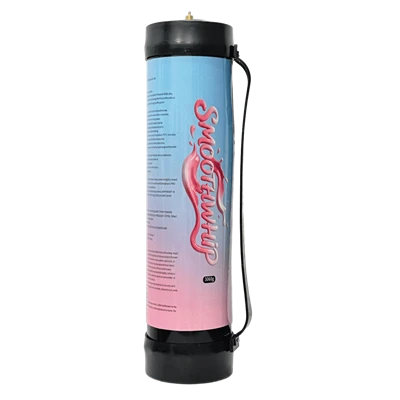
Now, if you’re a barista, bakery owner, caterer, or anyone who’s ready to make the switch to large capacity cream chargers and stop wasting money on small, single-use ones, we’re here to help. We supply bulk orders for all sizes, and we can give you tips on how to use them safely and efficiently. Just reach out to us to chat more about your needs, whether you’re buying a few for a small cafe or a pallet for a big event.
Small Cream Chargers And since we mentioned references, just to make sure this isn’t just my ramblings, here’s the stuff I looked up while writing this: FDA food safety guidelines for compressed gas food containers, studies on microbial contamination in sealed food-grade gases, and industry testing data on large capacity cream charger pressure ratings and residual gas levels.
Smoothwhip Industrial Co., Ltd.
As one of the most professional large capacity cream chargers suppliers in China, we have world-leading production equipment and strong manufacturing capabilities. We warmly welcome you to wholesale high quality large capacity cream chargers made in China here from our factory. We also accept customized orders.
Address: Room 1306, Building 4, U-Tiandi, No. 178 Puhui Road, Jiuting Town, Songjiang District, Shanghai
E-mail: info@safety-plus.cn
WebSite: https://www.smwhip.com/
