Hey everyone, let’s cut to the chase—if you’ve ever stopped to think about the hydraulic hoses under the hood of a semi, on a construction crane lifting steel beams, or even in a garbage compactor, you probably didn’t. But here’s the thing: I’ve been a hydraulic hose supplier for 12 years, and 9 out of 10 customers who call me have no clue what their hoses are actually made of. They just know they need ‘em to hold pressure and not blow out mid-job. That’s why I’m breaking this down, no fancy jargon, just real talk about the materials that make your whole operation run. Hydraulic Hose
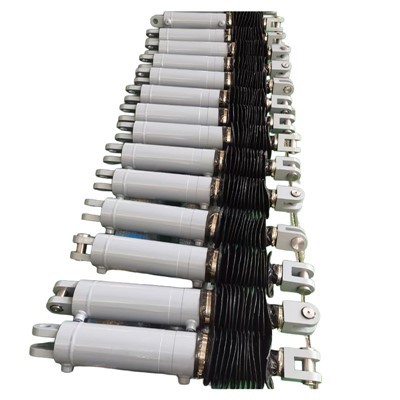
First off, let’s get one thing straight: hydraulic hoses aren’t just rubber tubes. If they were, they’d burst the second you cranked up a hydraulic pump to 3,000 psi (that’s a ton per square inch, for anyone not geeking out over pressure numbers). Every hose is a multilayered design, like a super-powered sandwich, and each layer has a specific job. Skip one, and you’re looking at a breakdown—usually at the worst possible time.
The innermost layer? That’s the tube, the stuff that touches the hydraulic fluid directly. This material has to survive whatever fluid’s flowing through it—whether it’s mineral oil (the most common), synthetic fluid, water-glycol mixes, even that weird biodegradable stuff people use for eco projects. If the tube reacts with the fluid? You get swelling, cracking, or gunk that clogs the whole system. For most standard jobs, we use synthetic rubber compounds here—nitrile (aka Buna-N) is the workhorse, hands down. It’s cheap, flexible, and pretty resistant to just about all the standard hydraulic fluids. But wait, if you’re running hot temps (like over 250°F) or using synthetic fluids? Nitrile starts to break down. That’s where we switch to something else—usually polytetrafluoroethylene, or PTFE for short. You might know that as Teflon, right? PTFE tubes are non-reactive, can handle temps up to 500°F, and don’t let any fluid seep through. They’re stiffer than nitrile, though, so we only use ‘em for specific, high-stakes jobs. Another one I see more lately? Thermoplastic polyamide, or PA for short. It’s lighter than rubber, holds up great to water-based fluids, and is cheaper than PTFE for certain applications—perfect for things like agricultural equipment that’s running in and out of mud and water all day.
Now, the middle part—this is the stuff that makes a hydraulic hose strong enough to handle that pressure. This is the reinforcement layer, and it’s make or break. There are two main types of reinforcement: wire and textile. Let’s start with textile because a lot of the smaller, lower-pressure hoses use ‘em. It’s usually braided nylon or polyester, right? Braiding means the strands crisscross over each other, so when pressure pushes out, they pull tight and hold the shape. These are for light to medium jobs—like a backhoe’s tilt cylinder or a wood splitter, where pressures are under 3,000 psi. They’re flexible too, so you can route ‘em around tight spots without kinking. But if you need more oomph? That’s steel wire. We’re talking high-tensile steel, usually woven or spiraled. Braided steel is for medium to high pressure (up to 6,000 psi) like forklifts or mobile cranes. Spiraled steel is next-level—multiple layers of wire spiral around each other, so they can handle 10,000 psi or more, which is for heavy construction, mining, or industrial presses. Yeah, spiraled steel hoses are stiffer and heavier, but if you’re lifting 50-ton steel beams, you don’t care about weight—you care about not dropping ‘em. Side note: I’ve had customers try to scrimp and use a braided steel hose for a spiraled job once. It blew out mid-lift, took out a side of a storage container, and cost ‘em way more than the extra $20 for the right hose. Don’t be that guy.
Then there’s the outermost layer—the cover, the stuff that’s exposed to the elements, abrasion, dirt, oil, whatever’s out there. This has to be tough, because if it tears or cracks, the reinforcement layer gets corroded, and the whole hose fails. Again, rubber is the go-to here, but different blends for different environments. Standard cover is usually a chloroprene rubber (CR), or neoprene. It’s resistant to oil, UV rays, and mild abrasion—perfect for most outdoor, on-road, or regular construction jobs. But if you’re working in super harsh conditions? Like mining, where you’re dragging hoses over sharp rock, or in chemical plants where spills are constant? We switch to things like polyurethane (PU) or even a synthetic rubber called EPDM. Polyurethane is way more abrasion-resistant than neoprene—we’ve had customers use the same PU cover hose for 5 years in a rock quarry, while their old neoprene ones lasted 18 months max. EPDM is for extreme temps—way hotter or colder than standard hoses. It can handle temps down to -40°F and up to 300°F, so it’s great for Arctic construction or metal smelting plants. I even had a customer working on an ice road in Canada last winter, their regular hoses got so stiff they couldn’t move ‘em, we swapped ‘em for EPDM, and they ran all season with no issues.
Wait, hold on—what about specialty hoses? Because not every job is standard. I mentioned PTFE earlier, but there’s also hose assemblies with stainless steel braids over PTFE tubes, for when you need that chemical resistance plus super high pressure. Those are common in food and beverage processing, where you can’t have rubber contaminating the product. Then there’s thermoplastic hoses that are all one material—no rubber, no steel, just a thermoplastic tube and reinforcement. They’re lightweight, don’t corrode, and are used a lot in aerospace, where weight is everything. And don’t forget about food-grade hoses, which use FDA-approved materials that won’t leach into food or drinks. I don’t carry a ton of those, but when I do, they’ve got a special nitrile or PTFE tube, a textile or stainless steel reinforcement, and a cover that meets food safety standards.
A lot of people ask me: does material matter more than brand? Honestly, sometimes. I’ve seen cheap hoses from no-name brands that use subpar materials—like a tube that’s just regular rubber instead of nitrile, or a reinforcement layer with cheap steel that rusts in 6 months. Those hoses might be $10 cheaper, but they blow out way faster, costing you downtime, repairs, even accidents. I’ve got a rule with my customers: we use only materials that meet SAE (Society of Automotive Engineers) standards, or ISO (International Organization for Standardization) specs. If a hose doesn’t have that rating, it’s not worth it, no matter how low the price is. For example, SAE 100R1 is the standard for single-wire braided rubber hoses, SAE 100R2 is two-wire braided, SAE 100R12 is spiraled steel. I stick to those because I know they’re tested to hold up to the pressure, temperature, and fluid they’re rated for.
Another thing that people sleep on: matching the material to the job. I had a farmer call me last month, he was using a standard hydraulic hose on his combine, and it kept bursting after a few weeks. Turned out he was running biodiesel fluid, which eats away at regular nitrile tubes. We swapped him for a PTFE-lined hose with a nitrile cover, and it’s been running for 3 months no issues. Another customer in the oil and gas industry needed hoses that could handle corrosive fumes, so we used EPDM covers and stainless steel reinforcement, instead of the standard neoprene and carbon steel. The difference was night and day.
So here’s the takeaway: hydraulic hoses are multilayered for a reason. The tube needs to be chemical-resistant, the reinforcement needs to hold pressure, the cover needs to handle the environment. Skimp on any layer, pick the wrong material, and you’re asking for a headache. If you’re buying hoses, don’t just look at the size and price—ask what they’re made of, make sure they meet SAE or ISO specs, and match ‘em to the fluid, pressure, and conditions you’re working in.

For the record, I’m not here to sell you the most expensive hose. I’m here to sell you the right hose for your job. Because downtime costs way more than a little extra for quality materials. If you’re not sure what kind of hose you need, don’t guess—reach out. I can walk you through what materials work for your specific setup, no pressure, no sales pitch. Just real advice from someone who’s been in this game long enough to know that the best hydraulic hose isn’t the shiniest or cheapest—it’s the one that works when you need it to.
Hydraulic Cylinder References:
Society of Automotive Engineers (SAE) Standards for Hydraulic Hoses, Series 100R1 to 100R17
International Organization for Standardization (ISO) 1436, Rubber and plastic hoses, assemblies and fittings for hydraulic transmission
Hydraulic Institute Engineering Data Book, 6th Edition, Chapter 3: Hose and Hose Assemblies
Wuhu Zhongye Fluid Equipment Co., Ltd.
We are one of the most experienced hydraulic hose manufacturers and suppliers in China, specialized in providing high quality customized products. Please feel free to wholesale bulk durable hydraulic hose in stock here from our factory. Contact us for quotation.
Address: No. 2, Hexing Road, Sanshan District, Wuhu City, Anhui Province
E-mail: zhongyehydro20@163.com
WebSite: https://www.zhongyehydro.com/
