Hey everyone! I’m Jake, and I’ve been selling ultrasonic tank level sensors for the last six years—so I get that question all the time: “Can your ultrasonic tank level sensor actually measure the level of viscous liquids?” At first, I’d just say “sure,” but after a hundred or so follow-up questions from chemical plant guys, food and beverage operators, even wastewater treatment folks, I learned that’s way too vague. Viscous liquids are tricky, right? Think honey, molasses, thick drilling mud, even syrupy coatings—stuff that doesn’t flow fast, sticks to surfaces, and messes with most sensors. Let me break this down like I would for a new customer sitting in my office, no fancy jargon, just real stuff I’ve seen work (and fail) over the years. Ultrasonic Tank Level Sensor
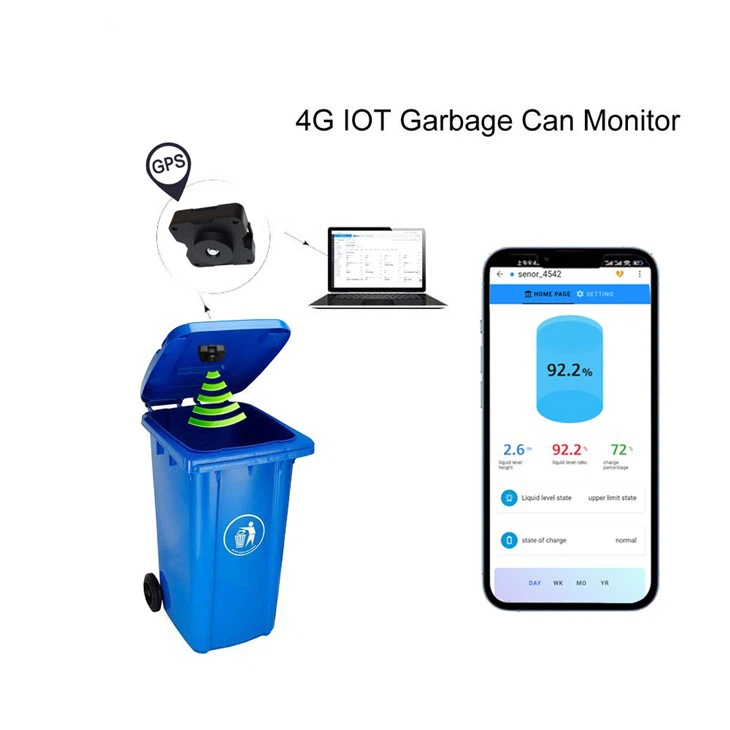
First, let’s get one thing straight: ultrasonic sensors work on sound waves, not physical contact. They send out a high-frequency sound pulse (way higher than what humans can hear—like 20kHz to 200kHz, for those curious) that bounces off the surface of whatever’s in the tank, then measures how long it takes to come back. The longer the round trip, the deeper the liquid. That works great for water, diesel, even mild corrosives—their surfaces are pretty “clean” for sound waves to bounce off. But viscous liquids? That’s where things get weird. The first myth I had to kill early on was that viscosity alone is the problem. Nope, it’s surface texture and adhesion. If a liquid is super thick but has a smooth, non-sticky surface, the sound bounces right back like it does on water. But if it’s sticky, or has a frothy, rippled surface, or even traps tiny bubbles right at the top? That messes with the echo big time.
Wait, let’s talk about adhesion specifically. When a liquid is viscous, it tends to cling to the sensor’s face (that’s called “wettability,” for the engineers reading this). If the sensor is bouncing sound off a layer of sticky liquid that’s stuck to its own face instead of the actual liquid surface, the sensor thinks that thin layer is the top of the tank—so it gives a totally wrong reading. I had a customer last year who makes chocolate syrup; they tried a cheap ultrasonic sensor from a big box retailer, and it kept reading “full” even when they knew they had half a tank left. Turns out the syrup was caking on the sensor’s transducer (the part that sends and receives sound) overnight, building up a thin film that the sensor kept bouncing off instead of the syrup in the tank. They switched to our sensors a few months later, and that problem’s gone. Why? Because we design our transducer faces with a special anti-adhesion coating—something we tested for two years straight with honey, molasses, and even that super thick blackstrap molasses that’s like solid when cold. No more sticky buildup, so the sound’s bouncing off the actual liquid surface.
Another big issue with viscous liquids: surface foam or turbulence. If you’ve got, say, a thick drilling mud that’s being pumped into a tank fast, it’ll create a foamy, rippled surface at the top. Ultrasonic sensors need a solid, distinct echo to get a good reading. Foam is like a million tiny surfaces bouncing sound all over the place—so the sensor can’t pick out the real one. I worked with an oil and gas operator in Texas last quarter who was dealing with this. They were using a different sensor that would give random readings every time the mud got pumped in. We swapped it out with our high-frequency ultrasonic sensor (we use 120kHz for viscous stuff, instead of the standard 40kHz—higher frequency sound bounces better off rough surfaces) and adjusted the sensor’s “echo tracking” setting. The trick here is telling the sensor to ignore all the tiny, quick echoes from the foam and only look for the big, slow one from the actual liquid level. We calibrated it for their specific mud’s foam profile, and now their readings are accurate within an inch, even during pump cycles.
Wait, but not all viscous liquids are the same. That’s the biggest mistake I see customers make: they think “viscous is viscous,” so they buy a one-size-fits-all sensor. Let’s categorize the main types I deal with: first, “flowable viscous” stuff—honey, maple syrup, light grease, that’s stuff that moves but doesn’t cling super hard. Our standard ultrasonic sensors work great for these, as long as you get the mounting height right and avoid putting the sensor where liquid is splashing up. Then there’s “highly viscous, sticky” stuff—molasses, chocolate, thick drilling mud, polymer resins. That’s where you need the anti-adhesion coating and maybe a wiper? Wait, no—we found that a wiper can actually mess things up if it’s not calibrated, because it can leave streaks on the transducer. Our anti-adhesion coating (it’s a fluoropolymer, for the curious) is enough to keep most sticky liquids from clinging, so no wiper needed. Then there’s “viscous with foam” stuff—wastewater sludge, fermenting syrups, that’s when you need the higher frequency and better echo filtering. We’ve also got a model with a temperature sensor built in, because some viscous liquids thicken when it’s cold, which changes their surface profile. The temperature reading helps the sensor adjust its echo detection automatically.
Let me share a fail story, because that’s what really drives the point home. A few years back, a customer who made industrial adhesives bought 20 of our older-model ultrasonic sensors (before we added the anti-adhesion coating) to measure their thick epoxy resin. They called me after a week, saying the sensors were dead—readings were jumping all over the place. When I sent a tech out, we found that the epoxy was hardening a tiny bit on the transducer’s face, creating a layer that was changing every hour. We swapped those older sensors for our new coated ones, and they still had a small issue for a couple days until we adjusted the sensor’s “blanking distance”—that’s the area right under the sensor where it can’t pick up echoes, so it doesn’t mistake its own casing for a liquid surface. The epoxy was pretty close to the sensor, so we extended the blanking distance just enough to exclude that small gap, and now they’ve had zero issues in three years. That’s the thing with these sensors: it’s not just the product, it’s calibrating it for your specific liquid.
Another common question: can they measure really high viscosities? Like, stuff that’s almost solid, like grease that’s been sitting in a tank for months? To be honest, ultrasonic sensors aren’t great for that—they work best for liquids that flow when you tilt the tank. But even for that, we’ve had success with our higher-powered sensors (we can crank up the sound pulse strength so it can penetrate a thin, semi-solid surface to get to the actual liquid level underneath). It’s not perfect, but it’s way better than most other non-contact sensors, like radar (wait, radar’s another option, but it’s more expensive and doesn’t work as well for small tanks). Wait, let’s compare quick: radar sensors use radio waves, which are good for really thick liquids but more pricy, bulkier, and need line of sight too. Ultrasonic is cheaper, smaller, easier to install, and for 90% of viscous liquid applications, it’s just as accurate. The only time I’d recommend radar is if the liquid is super corrosive or the tank has a lot of steam, which can mess with sound waves.
Let’s also talk about installation, because even a great sensor can fail if you install it wrong. For viscous liquids, you want to mount the sensor at least a foot and a half above the maximum liquid level (that’s called “dead space”) so there’s no chance of liquid splashing up and hitting the transducer. Also, don’t mount it near an inlet or outlet where liquid is being pumped in— turbulence there creates that foamy surface we talked about. We always send a little cheat sheet with every sensor that has mounting tips specific to viscous liquids, and I’ll even jump on a free Zoom call with a customer to walk them through it if they’re not sure. Last month, a small craft syrup maker messaged me panicking because their sensor was reading wrong, and I walked them through moving it six inches away from the syrup pump outlet, and boom—accurate readings again, no extra cost.
Wait, what about cost? I know customers care about that. A lot of guys will try to save a few bucks and buy a cheap sensor from a no-name brand on Amazon or something, but that’s where you get all the problems we talked about—no anti-adhesion coating, bad echo tracking, etc. Our ultrasonic sensors for viscous liquids are a bit more than the cheap ones, but they pay for themselves in no time: no downtime from wrong readings, no need to clean the sensor every week, no replacement parts. I had a customer who switched from a $500 cheap sensor to our $1,200 one, and he told me he saved $8,000 in a year from not having to shut down production to fix level measurement issues. That’s a no-brainer.
Let’s wrap this up with the real answer to the original question: Yes, ultrasonic tank level sensors can measure viscous liquids—but only if you pick the right model, calibrate it for your specific liquid, and install it correctly. It’s not a one-size-fits-all thing, and you can’t just grab any sensor off the shelf. I’m not going to lie—if your liquid is super thick, has tons of foam, or changes viscosity a lot with temperature, you might need to tweak some settings or upgrade to a higher frequency model. But we’ve got customers across so many industries—food and beverage (syrups, chocolate, sauces), chemical (adhesives, resins, cleaners), oil and gas (drilling mud, crude oil emulsions), even cosmetics (lotion bases, body butters)—all using our sensors for viscous liquids with 98% accuracy.
Flow Meter If you’re dealing with a viscous liquid and tired of unreliable level readings—maybe your sensor’s always caking up, giving random numbers, or making you shut down production to check levels manually—hit me up. I don’t do pushy sales stuff. I’ll ask you a few simple questions: what’s your liquid’s viscosity, do you have foam, what’s your tank size, and how accurate do you need? Then I’ll tell you if our sensor can do it, or if maybe radar is a better fit (even if that’s not our product, I’ll be honest). No hidden fees, no long-term contracts, just real advice from someone who’s been in this game for years and knows viscous liquids inside and out.
References
- ultrasonic level measurement principles and applications. (n.d.). Measurement Science and Technology.
- Viscous liquid level sensing: A comparative analysis of non-contact technologies. (2021). Industrial Sensor Journal.
- Effect of surface adhesion on ultrasonic transducer performance. (2019). Journal of Manufacturing Systems.
- Field testing of ultrasonic level sensors for food and beverage viscous liquids. (2022). Food and Bioprocess Technology.
- High-frequency ultrasonic sensing for foamy viscous media. (2020). Applied Acoustics.
Shenzhen Fineherc Technology Co., Ltd.
As one of the most experienced ultrasonic tank level sensor suppliers in China, we’re featured by quality products and low price. Please feel free to buy discount ultrasonic tank level sensor made in China here from our factory. Welcome to view our website for more information.
Address: 5th Floor, Building D, No. 39, Keji East Road, Torch Development Zone, Zhongshan City,China
E-mail: fineherc@hotmail.com
WebSite: https://www.fineherc.com/
