As a professional supplier of Galvalume sheets, I often encounter inquiries about the technical properties of our products. One question that has come up more frequently lately is about the Poisson’s ratio of Galvalume sheets. In this blog post, I’ll delve into what Poisson’s ratio is, its significance for Galvalume sheets, and how it impacts the performance of these sheets in various applications. Galvalume Sheet

Understanding Poisson’s Ratio
Poisson’s ratio, named after the French mathematician Siméon Denis Poisson, is a fundamental material property that describes the relationship between lateral strain and axial strain when a material is subjected to an uniaxial load. When a material is stretched or compressed in one direction (axial direction), it will also deform in the perpendicular directions (lateral directions). Poisson’s ratio, denoted by the Greek letter nu (ν), is defined as the negative ratio of the transverse strain (lateral deformation) to the axial strain (deformation in the loading direction).
Mathematically, Poisson’s ratio is expressed as:
ν = – (ε_transverse / ε_axial)
Where ε_transverse is the lateral strain and ε_axial is the axial strain. The negative sign in the formula indicates that when a material is stretched (positive axial strain), it usually contracts in the lateral direction (negative transverse strain), and vice versa.
Poisson’s ratio is a dimensionless quantity, and its value ranges from -1 to 0.5 for most engineering materials. For isotropic materials, which have the same properties in all directions, the theoretical upper limit of Poisson’s ratio is 0.5. A value of 0.5 indicates that the volume of the material remains constant during deformation, which is characteristic of an incompressible material. Conversely, a value close to -1 suggests that the material expands laterally when stretched axially.
Poisson’s Ratio of Galvalume Sheets
Galvalume sheet is a type of steel sheet coated with an aluminum-zinc alloy. This coating provides excellent corrosion resistance, making Galvalume sheets suitable for a wide range of applications, including roofing, siding, and automotive components.
The Poisson’s ratio of Galvalume sheets is primarily determined by the properties of the base steel and the coating. The base steel typically has a Poisson’s ratio in the range of 0.28 – 0.33, which is common for most structural steels. The aluminum-zinc coating also has its own Poisson’s ratio, but since the coating is relatively thin compared to the base steel, the overall Poisson’s ratio of the Galvalume sheet is largely influenced by the base steel.
In practical terms, the Poisson’s ratio of Galvalume sheets can vary slightly depending on factors such as the composition of the base steel, the thickness of the coating, and the manufacturing process. However, for most engineering calculations, a Poisson’s ratio value of around 0.3 is commonly used for Galvalume sheets.
Significance of Poisson’s Ratio for Galvalume Sheets
The Poisson’s ratio of Galvalume sheets plays a crucial role in several aspects of their performance and application:
Structural Design
In structural design, understanding the Poisson’s ratio is essential for accurately predicting the behavior of Galvalume sheets under load. When a Galvalume sheet is subjected to a uniaxial load, such as in a roofing application where the sheet is supported at the edges and loaded by wind or snow, the lateral contraction or expansion due to Poisson’s effect can affect the overall stability and deflection of the structure. Engineers need to consider this effect when designing the support system and determining the appropriate thickness and spacing of the sheets.
Forming and Fabrication
During the forming and fabrication processes, such as bending, rolling, or stamping, the Poisson’s ratio of Galvalume sheets influences the material’s ability to deform without cracking or wrinkling. A higher Poisson’s ratio means that the material will contract more in the lateral direction when stretched axially, which can increase the risk of wrinkling or buckling during forming operations. Manufacturers need to take this into account when setting up the forming equipment and adjusting the process parameters to ensure high-quality finished products.
Fatigue Resistance
The Poisson’s ratio also affects the fatigue resistance of Galvalume sheets. When a sheet is subjected to cyclic loading, such as in a vibrating structure or a moving vehicle component, the lateral deformation caused by Poisson’s effect can contribute to the initiation and propagation of cracks. A proper understanding of the Poisson’s ratio can help in designing structures and components that are more resistant to fatigue failure.
Applications of Galvalume Sheets and Poisson’s Ratio Considerations
Roofing and Siding
In roofing and siding applications, Galvalume sheets are often used in large panels that are subjected to various environmental loads, such as wind, snow, and temperature changes. The Poisson’s ratio of the sheets affects how they expand and contract with temperature variations and how they respond to wind-induced pressures. For example, in regions with large temperature fluctuations, the lateral contraction or expansion of the sheets due to Poisson’s effect can cause stress concentrations at the joints, leading to potential leakage or damage. By considering the Poisson’s ratio in the design, architects and engineers can select the appropriate panel size, fastening method, and expansion joints to minimize these issues.
Automotive Components
Galvalume sheets are also used in the automotive industry for manufacturing various components, such as body panels, fuel tanks, and exhaust systems. In these applications, the sheets are often formed into complex shapes through stamping and bending processes. The Poisson’s ratio of the sheets affects the formability and the quality of the finished components. Automotive manufacturers need to optimize the forming processes based on the Poisson’s ratio to ensure that the components meet the required dimensional accuracy and structural integrity.
Conclusion
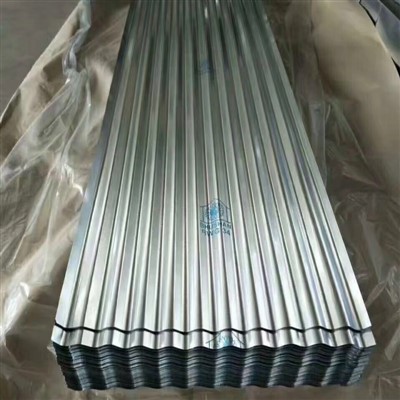
In summary, the Poisson’s ratio of Galvalume sheets is an important material property that has significant implications for their performance, design, and application. As a Galvalume sheet supplier, I understand the importance of providing accurate technical information to our customers. By having a good understanding of the Poisson’s ratio and its effects, engineers, architects, and manufacturers can make informed decisions when selecting Galvalume sheets for their projects.
Cold Rolled Sheet If you are interested in purchasing Galvalume sheets for your next project, I encourage you to contact us for more information. Our team of experts is ready to assist you in choosing the right product and providing technical support to ensure the success of your project.
References
- Callister, W. D., & Rethwisch, D. G. (2010). Materials Science and Engineering: An Introduction. Wiley.
- ASM Handbook Committee. (1990). ASM Handbook, Volume 1: Properties and Selection: Irons, Steels, and High-Performance Alloys. ASM International.
Tianjin Kaida Import&Export Co., Ltd.
Tianjin Kaida Import&Export Co.,Ltd is one of the most professional galvalume sheet manufacturers and suppliers in China, specialized in providing high quality products with low price. We warmly welcome you to buy discount galvalume sheet from our factory. For more cheap products, contact us now.
Address: YaXin Building, No. 35 Nanjing Road, Hexi District, Tianjin
E-mail: info@tjkaida.com
WebSite: https://www.tjkdsteel.com/
